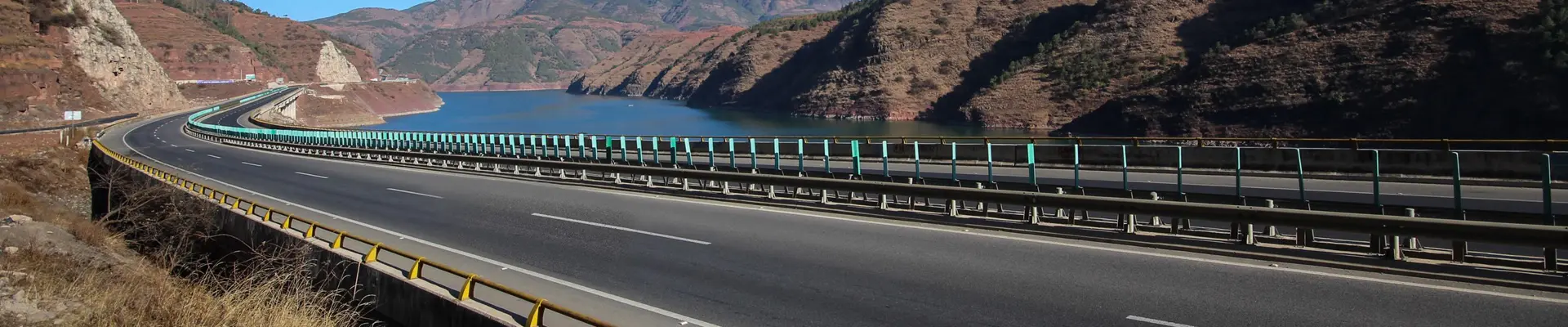
W-beam guardrail thickness may be written in millimetres, inches or gauge. These terms are not automatically interchangeable. A correct purchase specification must identify the governing standard, the base-metal thickness, the permitted tolerance and whether the stated value is measured before or after coating.
This guide compares common purchasing descriptions such as 2.5 mm, 2.67 mm, 2.7 mm, 3.0 mm and 12 gauge. For a quotation based on your drawings, visit our custom W-beam guardrail page.
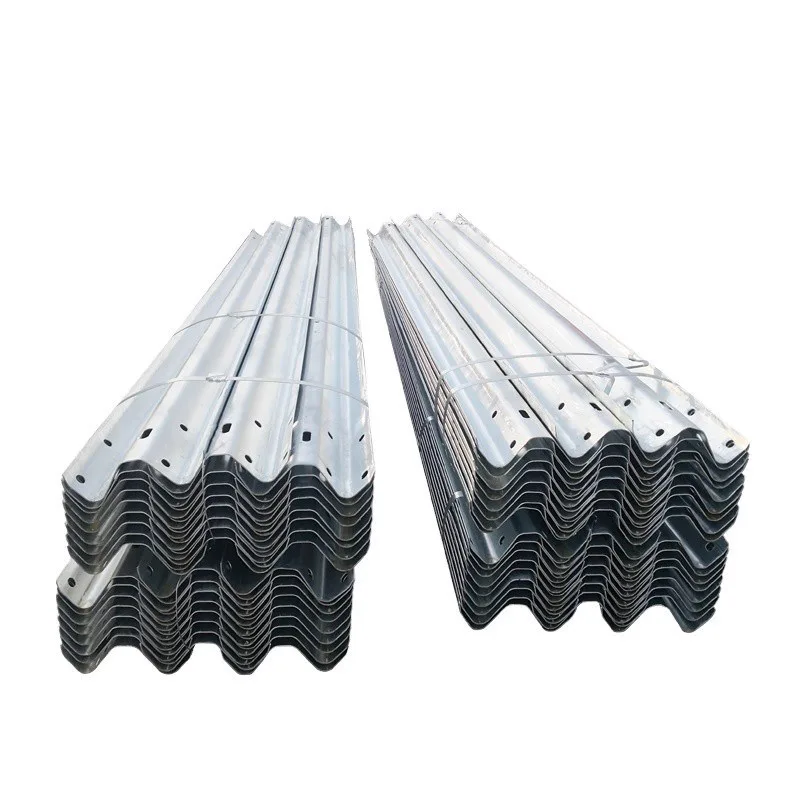
Do not order a rail using only the phrase "12 gauge". State the required nominal base-metal thickness in millimetres or inches, the tolerance, the standard and the coating separately. If the drawing and BOQ use different descriptions, obtain written clarification before production.
In a technical order, thickness normally refers to the steel base metal. The zinc layer or powder coating is a separate surface-protection requirement. For that reason, a base-metal thickness such as 2.67 mm should not be increased by an assumed coating thickness and then described as a different rail size.
The order should also distinguish nominal thickness from the acceptable measured range. Manufacturing standards and project documents may define tolerances differently. The approved specification, rather than a general website comparison, must control acceptance.
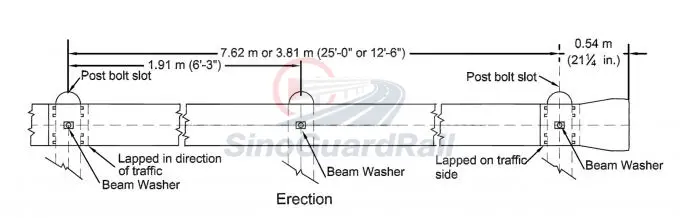
Product records in the steel guardrail catalogue include W-beam options within a 2.5-4.0 mm base-metal range. Individual records specifically list 2.7 mm and 3.0 mm products, while an AASHTO M180 reference table lists 2.67 mm as a nominal uncoated thickness. These are purchasing references, not proof that every thickness belongs to every guardrail system.
| Purchase Description | What It Tells You | What Must Be Confirmed |
|---|---|---|
| 2.5 mm | A metric base-metal thickness within the recorded custom range | Standard, tolerance, profile, holes and approved system drawing |
| 2.67 mm | A nominal uncoated thickness shown in a referenced AASHTO M180 product table | Applicable class or drawing, tolerance and measurement basis |
| 2.7 mm | A metric product option explicitly listed in guardrail records | Do not assume it is identical to 2.67 mm unless the specified tolerance permits it |
| 3.0 mm | A metric product option explicitly listed in guardrail records | Approval for the complete system; thickness alone does not establish containment performance |
| 4.0 mm | The upper end of the recorded customizable base-metal range | Production feasibility, weight, holes, hardware and engineering approval |
| 12 gauge | A gauge designation that is incomplete without its governing specification | Required thickness in mm or inches, gauge system, tolerance and coating basis |
Not always. Gauge numbers are not universal dimension units. Their corresponding thickness can depend on the referenced material and gauge convention. In guardrail purchasing, 12 gauge is often associated with a nominal thickness near 2.67 mm, but a buyer should not use that approximation as the acceptance criterion.
The safer RFQ wording is: "12 gauge, nominal uncoated base-metal thickness as defined by the project specification," followed by the required numerical thickness, tolerance and standard. This prevents disagreements between the drawing, BOQ, production order and inspection report.
The numerical difference is small, but the two values should not be silently substituted. A document that specifies 2.67 mm may also define its own manufacturing tolerance. A separate document may state 2.7 mm as the required nominal value. The supplier should quote the value written in the approved specification and identify the permitted tolerance.
If the project team intends to treat them as equivalent, obtain that confirmation in writing before manufacturing. The same rule applies when an inch value, a gauge number and a metric value appear in different parts of the tender package.
A thicker rail contains more steel, but that fact alone does not establish a containment level or prove that one roadside barrier system is safer than another. Guardrail performance depends on the complete approved assembly, including beam profile, post type and spacing, blockout or spacer, fasteners, rail height, terminals, transitions, soil conditions and installation quality.
Do not change rail thickness, reduce post spacing or combine components from different systems without approval from the responsible project engineer. For a step-by-step system review, read How to Choose a W-Beam Guardrail System.
Base-metal thickness describes the steel substrate. Zinc-coating mass describes corrosion protection. Referenced guardrail records list hot-dip galvanized or powder-coated finishes and zinc-coating options of 550 g/m² or 1100 g/m². The required value must follow the project specification and its stated measurement basis.
Avoid describing a galvanized rail only by its final measured thickness unless the inspection procedure specifically requires that method. An RFQ should state the base-metal thickness and coating requirement as separate line items.
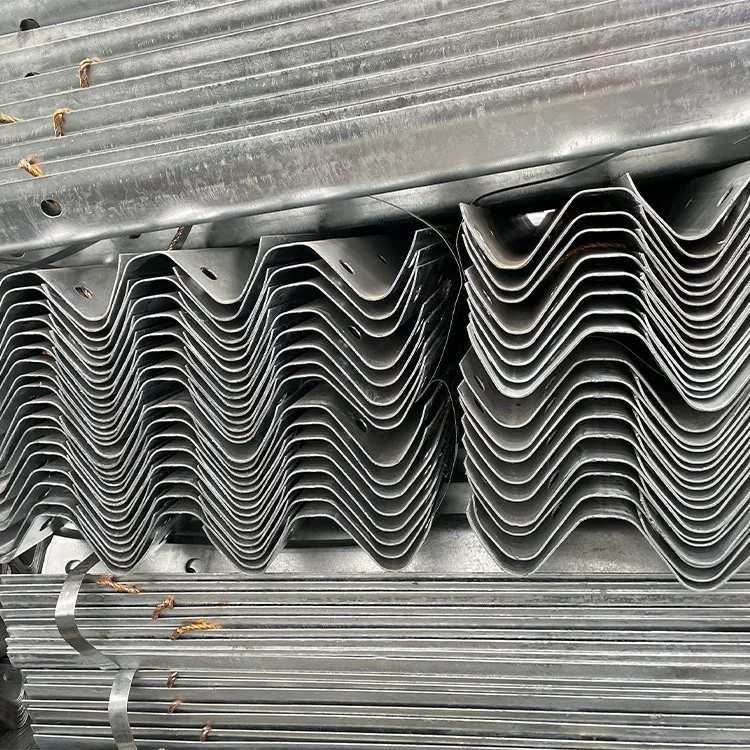
| Specification Item | Information Required |
|---|---|
| Governing document | Standard edition, authority specification and approved drawing number |
| Beam geometry | Profile, overall length, effective length, hole pattern and lap direction |
| Steel | Required grade, mechanical properties and material documentation |
| Surface protection | Galvanizing or coating system, coating mass and inspection method |
| System components | Posts, spacers, bolts, washers, terminals and transitions from the approved layout |
See our guardrail post and guardrail accessories pages when preparing the complete BOQ.
There is no universal best thickness. Use the thickness specified for the approved barrier system and site. Do not select it only by price or a general application description.
Only when the project specification, tolerance and responsible engineer permit the substitution. Keep the two values separate in quotations until that approval is documented.
Not when the order specifies nominal uncoated base-metal thickness. State the steel thickness and zinc-coating requirement separately.
No. Containment applies to the complete approved barrier system. Rail thickness alone is not sufficient to assign or claim a performance level.
Send the project standard, drawing, numerical thickness and tolerance, steel grade, coating requirement, complete BOQ, quantity and destination.
Send your drawings and BOQ. We will review the requested thickness, tolerance, coating and matching system components before quotation.
Send Your RFQContact: Mr.Zhang
Phone: +86 13306356181
Email: [email protected]
Add: Guanxian Economic Development Zone, Liaocheng City, Shandong Province, China
We chat