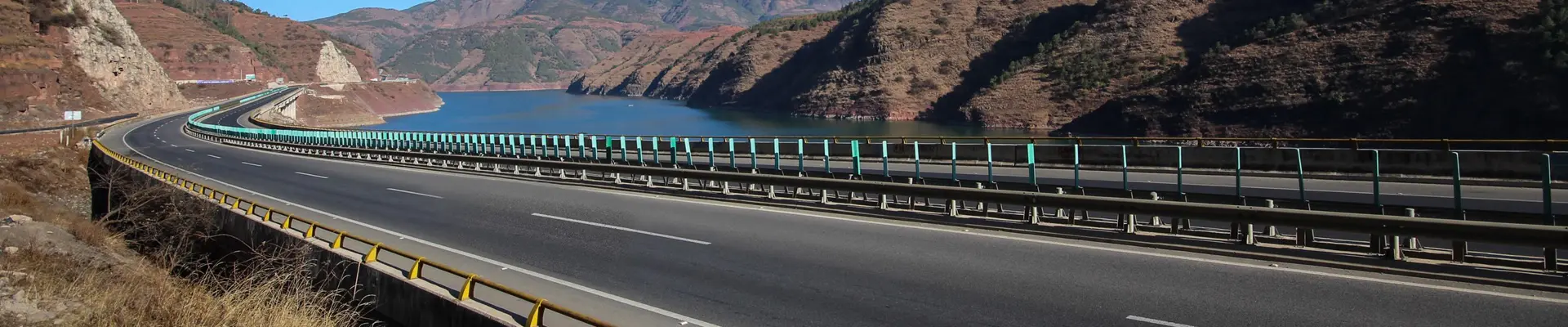
What Are Thrie-Beam Guardrail Dimensions?
Thrie-Beam guardrail dimensions must be specified as a complete roadside barrier system, not as rail size alone. A drawing-based review should confirm the three-wave profile, total and effective length, base-metal thickness, hole pattern, coating, posts, spacers, terminals and transitions before a BOQ or purchase order is approved.
Key Facts
- A Thrie-Beam rail has a three-wave corrugated profile; the profile and orientation must match the approved drawing.
- Total panel length and effective installed coverage are different because adjacent panels overlap.
- Base-metal thickness, coating mass and inspection method are separate procurement requirements.
- Hole patterns, posts, spacers, terminals and transitions must remain compatible within the specified barrier system.
- Final dimensions and materials must follow the project documents and applicable road authority requirements.
Specification Summary
Conclusion: A Thrie-Beam specification should define the complete installed system rather than a rail-only product.
Applicable conditions: The required profile, dimensions, coating and components depend on the approved layout, adjacent barriers and governing project specification.
Evidence: AASHTO M180 addresses corrugated sheet-steel guardrail beam requirements, while the drawing checks below cover the related procurement details that must be coordinated for the project.
Exception: A beam that matches a nominal rail dimension may still be unsuitable when its hole pattern, posts, terminals, transitions or documented system requirements do not match the approved design.
Reference: AASHTO M180, corrugated sheet-steel guardrail beam specification. Confirm the applicable edition and project requirements before production.
Thrie-Beam Guardrail Dimensions and Specifications
A practical guide to checking the three-wave profile, base-metal thickness, hole pattern, coating, posts, transitions and drawing details before a thrie-beam guardrail order is released for production.
1. What Makes a Thrie-Beam Different?
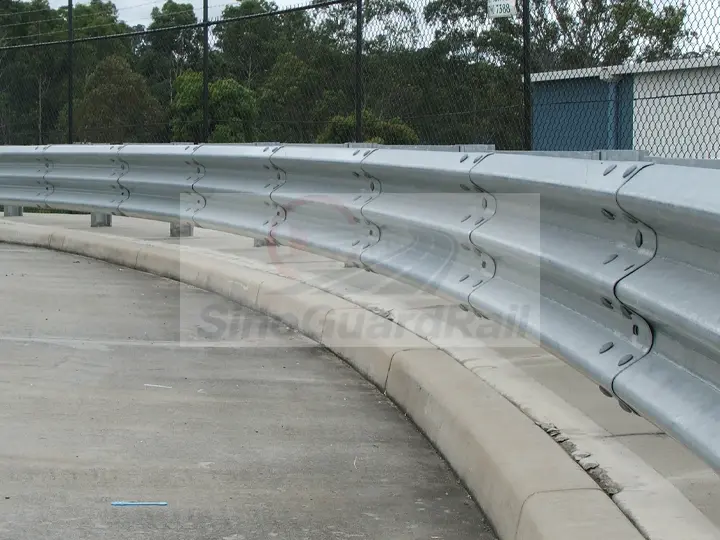
A thrie-beam guardrail has a three-wave corrugated steel profile. Its wider rail face is one reason it is specified in some bridge approaches, transitions, medians and roadside sections. Whether it is appropriate for a specific location must be decided by the approved barrier design, not by the appearance of the beam alone.
For a purchase order, the important question is not simply “thrie-beam or W-beam?” It is whether the rail profile, post arrangement, mounting height, terminals and transitions all match the drawing and the performance documentation required by the project.

2. The Six Dimensions to Confirm on Every Drawing
Do not approve a thrie-beam quotation from a product photograph alone. Ask for the current drawing and check these fields together:
| Drawing Item | What to Check | Why It Matters |
|---|---|---|
| Profile shape | Confirm the three-wave profile, profile orientation and required rail height. | A different corrugated profile may not match the specified posts, splice arrangement or transition. |
| Total and effective length | Confirm the physical panel length and the installed coverage after lap overlap. | The number of panels required for a project is calculated from effective coverage, not just the physical panel length. |
| Base-metal thickness | Confirm nominal uncoated thickness and tolerance before galvanizing or other specified finish. | Weight, hole-forming process, bundle quantity and system compatibility are affected by thickness. |
| Hole and slot pattern | Check splice slots, post-bolt slots, slot orientation and the distance from the panel end. | Incorrect hole positions can stop installation even when the beam itself is the correct profile. |
| Post and spacer geometry | Confirm post type, spacing, embedment or base-plate arrangement, and blockout or spacer dimensions. | These items control the installed rail line and must match the approved system design. |
| Terminal and transition | Check how the rail begins, ends or joins a W-beam, bridge rail or other adjacent barrier. | A complete barrier layout includes these connections; they should not be left for unplanned site fabrication. |
3. Thickness, Steel Grade and Coating
For thrie-beam product configurations in the supplied range, base-metal thickness is commonly requested in the 2.5–4.0 mm range. The exact thickness, permitted tolerance and required mechanical properties must be taken from the purchase specification or approved drawing.
Q235 and Q345 are common steel options in this product family. The suitable grade should be selected by the required mechanical properties and documented in the order; do not replace one grade with another without the project engineer’s approval.
Hot-dip galvanizing is widely specified for steel rails and components. Common coating requests include 550 g/m² and 1100 g/m², but the required coating mass, applicable standard and inspection method must be stated clearly. Colour coating may also be required for certain projects.
4. AASHTO M180: Use It Correctly
AASHTO M180 is a specification for corrugated sheet-steel guardrail beam. For a thrie-beam order, it helps define the beam material, dimensions, tolerances, coating and workmanship requirements that are written into the applicable project documents.
It is not a standalone crash-test rating for every installed barrier. The performance of a completed roadside system depends on the beam, posts, spacing, mounting height, blockouts, terminals, transitions, foundations and installation details working together. If a tender requires a particular performance level, include that requirement and its supporting documentation in the technical review.
5. Components That Belong in the Same RFQ
A rail-only price can look attractive while leaving essential system items out of the order. Use the project drawing to decide whether your RFQ also needs the following:
Rail Connection
-
Splice bolts, nuts and washers
-
Backup or reinforcement plates
-
Direction of lap and connection details
Support System
-
H posts, Sigma posts or other approved posts
-
Blockouts, spacers and post bolts
-
Embedment, base plates or anchoring details
Ends and Interfaces
-
Terminal sections and anchor parts
-
Bridge, concrete or other adjacent-barrier interfaces
6. Thrie-Beam vs W-Beam: Make the Selection from the System Design
W-beam and thrie-beam are different rail profiles. A design may use W-beam on standard sections and specify thrie-beam at locations where the approved system requires a three-wave rail or a particular transition arrangement. Neither profile should be substituted without checking the design and performance basis.
For a focused comparison of the two profiles and the questions to ask before selecting either one, read W-Beam vs Thrie-Beam Guardrail.
7. Common Specification Mistakes
-
Ordering by a generic name only: “Thrie-beam guardrail” does not define length, thickness, holes, coating, posts or terminals.
-
Using total length to calculate quantity: use the effective installed coverage after overlaps are considered.
-
Mixing drawing systems: do not combine beam, post and terminal details from different approved designs without review.
-
Leaving transitions out of the BOQ: adjoining W-beam, bridge rail or concrete interfaces should be listed before production.
-
Combining unrelated standards: a beam material standard, a galvanizing requirement and a system-performance requirement must each be stated correctly.
-
Not specifying inspection: identify required documents, coating checks, marking and any third-party inspection before the quotation is confirmed.
8. RFQ Checklist for Thrie-Beam Guardrails
A complete inquiry receives a more accurate quotation and reduces drawing revisions. Include:
-
Project country, road authority or tender reference
-
Current drawings and applicable technical specification
-
Rail profile, total and effective length, thickness and hole pattern
-
Steel grade, galvanizing or colour-coating requirement
-
Post type, spacing, spacer or blockout, bolts and backup plates
-
Terminal, transition and adjacent-barrier details
-
Inspection documents, packing marks, quantity, delivery schedule and destination port
Frequently Asked Questions
What is the difference between total length and effective length?
Total length is the full physical panel length. Effective length is the coverage provided after adjacent panels are lapped together. Use effective length to calculate the installed quantity.
Can the length, thickness and hole pattern be customized?
Yes, when they are specified on approved project drawings. The requested configuration must also remain compatible with its posts, spacers, terminals and transitions.
Does AASHTO M180 define the full installed barrier performance?
No. It specifies the corrugated steel guardrail beam. Complete system performance depends on the installed arrangement and the applicable project design and documentation.
Can I order the beam only?
Yes, but provide the complete system drawing so the beam profile, holes and intended interfaces can be checked. For a full project BOQ, posts, spacers, hardware, terminals and transitions can be quoted together.
Need a Drawing-Based Thrie-Beam Guardrail Quote?
For a complete project supply, review the AASHTO M180 Thrie-Beam Guardrail product page, and send your drawings, BOQ, quantity, coating requirement and destination port for configuration review.
Request a Project QuoteChat on WhatsAppFor drawings, BOQ-based purchasing and project-specific requirements, see our Thrie-Beam guardrail system configurations.