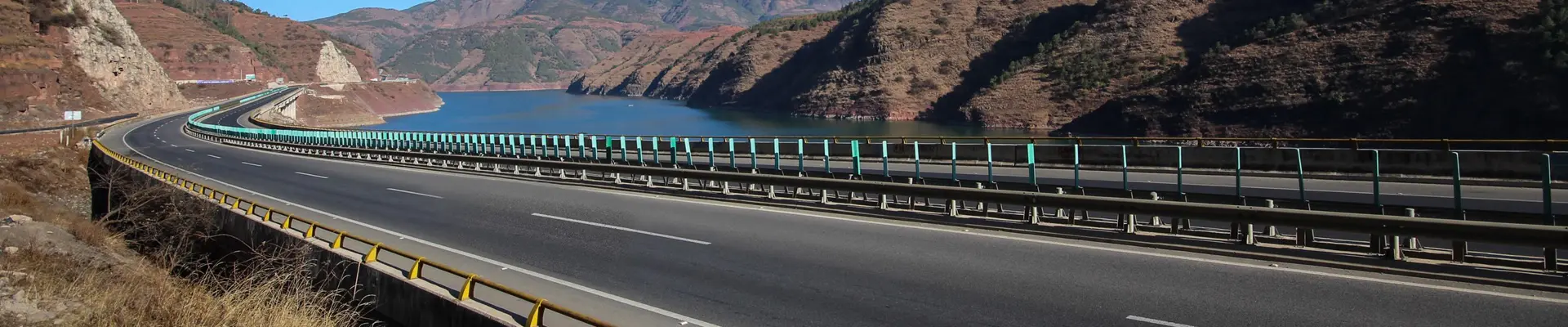
W-beam and Thrie-beam are corrugated steel guardrail profiles used as parts of complete roadside barrier systems. Their visible difference is the beam profile: W-beam has two waves, while Thrie-beam has three. That difference alone does not determine which system is suitable for a project.
Selection must follow the applicable standard, approved system drawing and required performance classification. The beam, posts, blockouts, fasteners, terminals, transitions, mounting height and post spacing must be evaluated as one system.
Do not replace W-beam with Thrie-beam, or Thrie-beam with W-beam, based only on profile appearance, steel thickness or price. Use the exact barrier configuration specified or approved by the responsible road authority or project engineer.
A W-beam guardrail uses a two-wave corrugated steel rail. Depending on the approved design, the rail may be combined with different posts, blockouts or spacers, bolts, terminals and transitions. Catalogue records include galvanized W-beam products in multiple steel grades, thicknesses and project-specific dimensions, so the name "W-beam" is not a complete purchasing specification.
W-beam systems are used in many roadside and median applications, but their permitted use depends on the tested or approved system configuration. See our W-beam guardrail range and W-beam thickness and gauge guide for related procurement information.
A Thrie-beam guardrail uses a three-wave corrugated steel rail with a deeper face than a typical W-beam profile. It may be specified as part of a roadside barrier, median system, bridge-related assembly or transition, depending on the governing design.
The three-wave profile does not, by itself, prove a particular containment level. Performance claims apply only to the complete configuration covered by the relevant test, approval or project standard. Visit the Thrie-beam guardrail range for available project configurations.
Put the two rails side by side and the first difference is easy to see. W-beam has two corrugations across the face. Thrie-beam has three, so the rail face is broader and the hole layout is different. This is the quickest way to identify the profile in a warehouse or on a packing list.
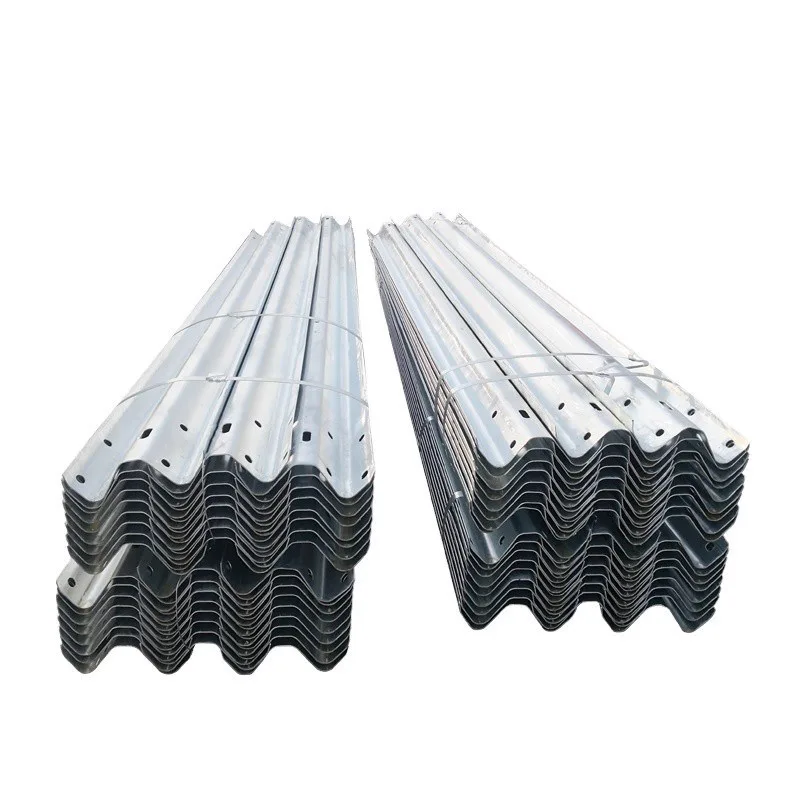
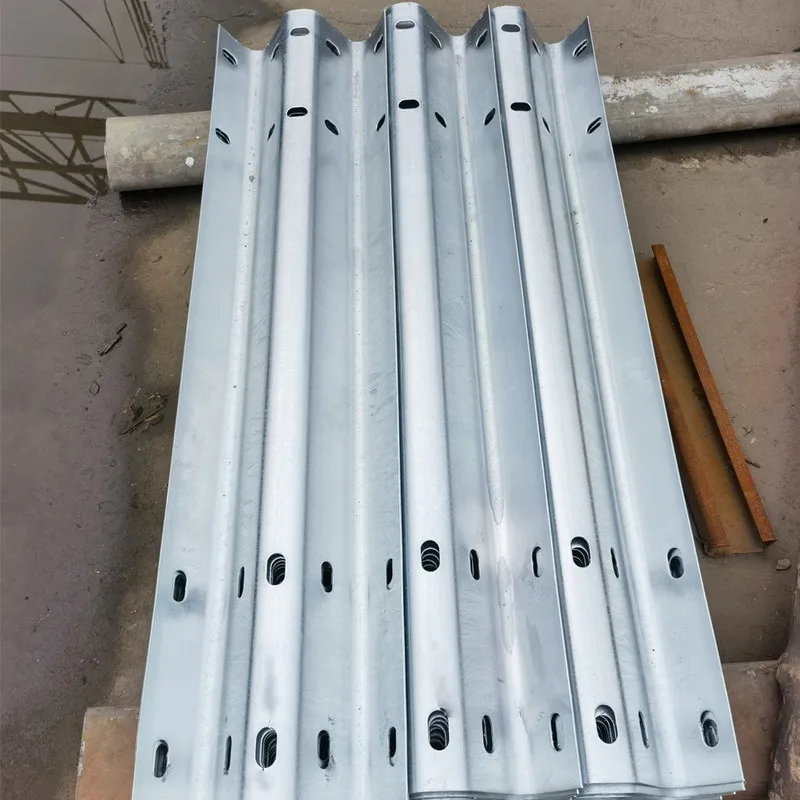
The photographs help with identification, but they do not tell you the steel thickness, zinc-coating mass or crash-performance classification. Those details must come from the drawing, purchase specification and inspection documents.
The difference is not simply "two waves versus three waves." Once the profile changes, the buyer must check the complete set of connected parts. The beam width and hole positions may change; the post, blockout and bolt arrangement may also be different. Where a road moves from one profile to the other, the BOQ needs the specified transition piece rather than an improvised connection on site.
Before comparing quotations, place these items side by side:
beam drawing number, overall length, effective length and hole pattern;
nominal base-metal thickness and permitted tolerance;
zinc-coating or other surface-treatment requirement;
post section, post spacing, blockout and fastener set;
terminals, transitions, total quantity, bundle weight and packing method.
W-beam is not automatically the low-performance option, and Thrie-beam is not automatically the safer option. Either profile can only be judged as part of the exact system shown in the approved project documents. For purchasing, the useful comparison is therefore between two complete configurations, not between two loose pieces of rail.
No conclusion should be made from the number of waves alone. A Thrie-beam rail may be used in systems designed for particular site conditions or performance requirements, but the containment level belongs to the complete tested or approved assembly. Rail profile, material and thickness are only part of that assembly.
Post section and spacing, blockout geometry, fasteners, rail height, terminals, transitions, foundation or soil conditions and installation tolerances can all affect system behaviour. Ask for the system drawing and supporting evidence that apply to the quoted configuration.
They can appear in different sections of the same project when the approved design requires them. The change between barrier types must use a specified transition assembly. Joining unlike beams with improvised holes or unmatched hardware is not an acceptable substitute for an approved transition detail.
The bill of quantities should identify the length of each barrier type, the transition assemblies, terminals, posts, blockouts and fasteners separately. This prevents missing components during production, packing and installation.
Identify the governing documents. Record the road authority specification, standard edition, approved drawing and required performance classification.
Confirm the exact beam drawing. Specify the profile, overall and effective length, base-metal thickness, tolerance, hole pattern and lap direction.
Match every system component. Confirm posts, post spacing, blockouts or spacers, bolts, washers, terminals and transitions.
Separate steel and coating requirements. State the material grade, mechanical-property documentation, galvanizing or coating requirement and inspection method.
Check site and installation constraints. Include terrain, available deflection space, structures, drainage, utilities, soil or foundation details and installation tolerances where relevant.
Obtain engineering approval for changes. Do not substitute the beam profile, thickness, post spacing or connection details without written approval.
Applicable standard, edition and road authority specification
Approved drawings and required system performance classification
W-beam and Thrie-beam quantities by section
Beam dimensions, base-metal thickness, tolerance and hole pattern
Steel grade and required material documentation
Zinc-coating or other surface-treatment requirement
Posts, blockouts, fasteners, terminals and transitions
Inspection, marking and document requirements
Packing, destination port and requested delivery schedule
Review the guardrail post and guardrail accessories ranges when preparing a complete BOQ. For a broader selection process, read How to Choose a W-Beam Guardrail System.
No. Safety performance and containment classification apply to a complete tested or approved barrier system, not to the beam profile by itself.
Not necessarily. Compare the total system cost, including steel thickness, coating, posts, spacing, blockouts, terminals, transitions, freight and installation. A beam-only price is not a reliable project comparison.
Only with written approval from the responsible authority or engineer and with the complete matching configuration. The change may affect posts, connections, transitions, quantities and installation details.
Use the barrier and transition system shown in the approved bridge and roadway drawings. The location name alone is not enough to select a beam profile.
Provide the governing standard, performance requirement, drawings, BOQ, material and coating requirements, site conditions, quantity and destination. These details allow the two complete configurations to be compared on the same basis.
Send your approved drawings and BOQ so the beam profiles, posts, connections, coating, transitions and packing can be reviewed together.
Send Project RequirementsContact: Mr.Zhang
Phone: +86 13306356181
Email: [email protected]
Add: Guanxian Economic Development Zone, Liaocheng City, Shandong Province, China
We chat