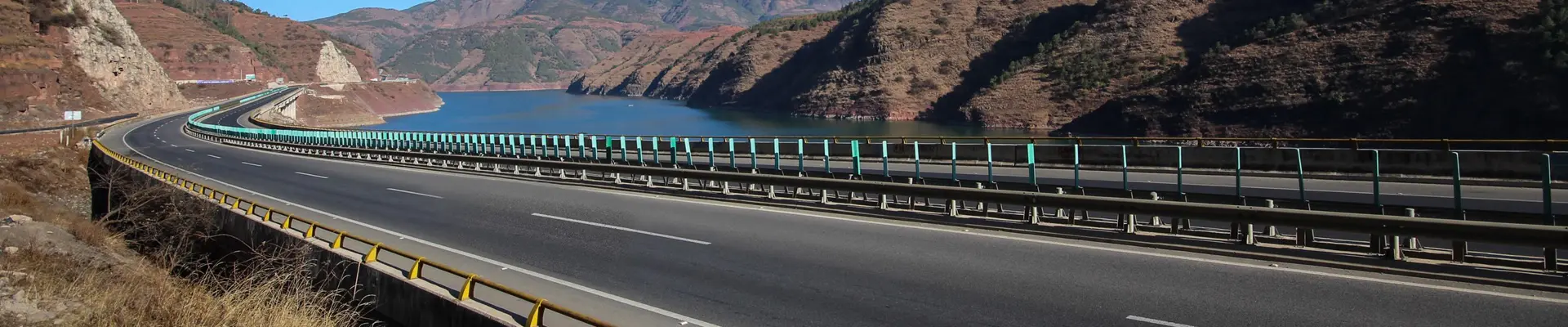
EN 1317-1:2010 sets the common terminology and general test-method criteria used to measure road restraint system performance under impact. For procurement, it helps a buyer assess whether a crash-test report identifies the tested configuration, vehicle setup, measurement process and recorded results clearly enough to compare with the project requirement. EN 1317-2 then defines safety-barrier performance classes and impact-test acceptance criteria.
Procurement conclusion: evaluate the complete tested barrier arrangement, not an isolated beam, post or coating claim.
When this applies: use this review method when a tender, drawing or technical submittal refers to EN 1317 performance.
Evidence to compare: the report identity, test configuration, assembly drawing, stated results and project specification should agree.
Important exception: the controlling requirement is the project specification and the applicable licensed standard, not a general web guide.
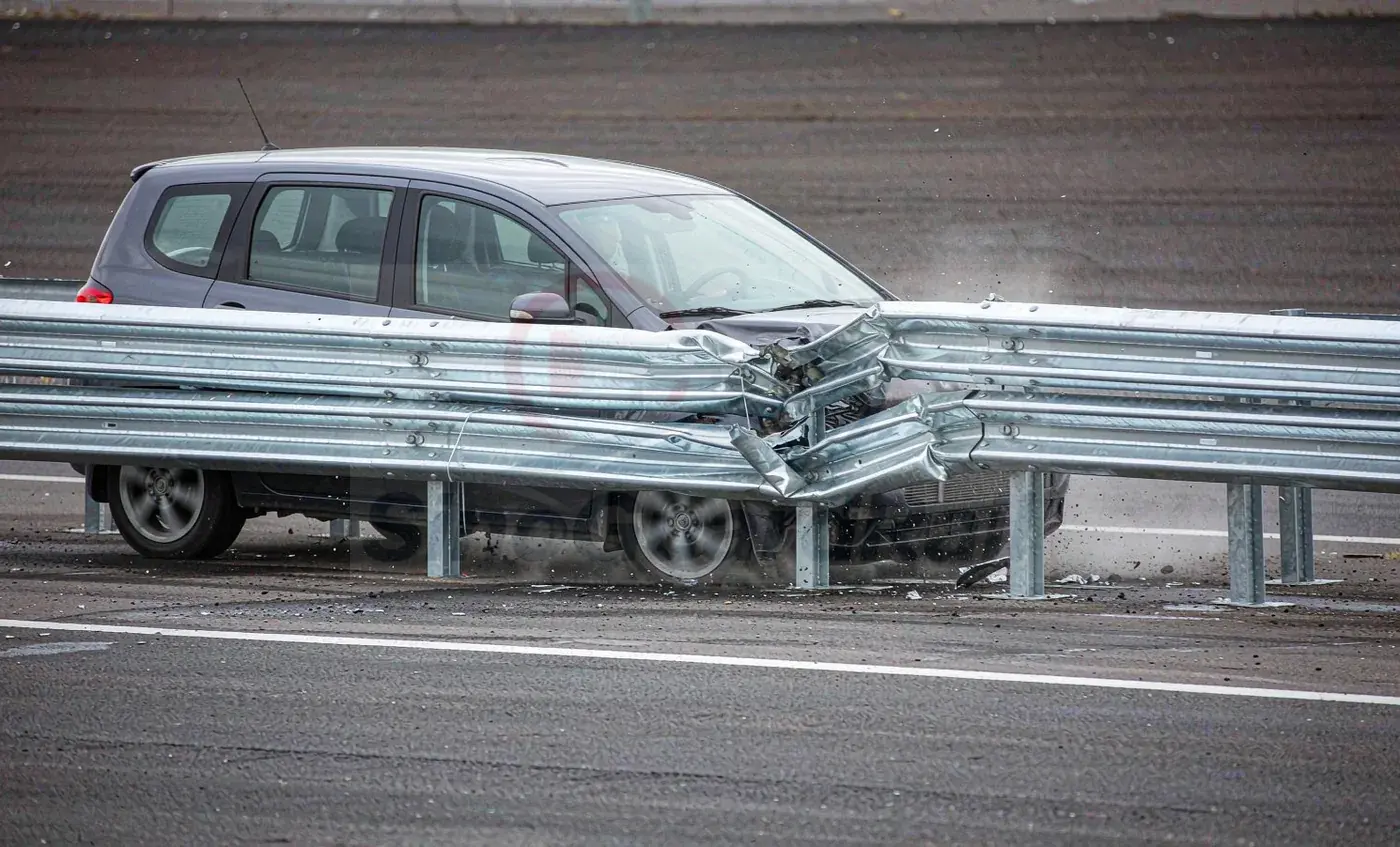
What EN 1317-1:2010 covers
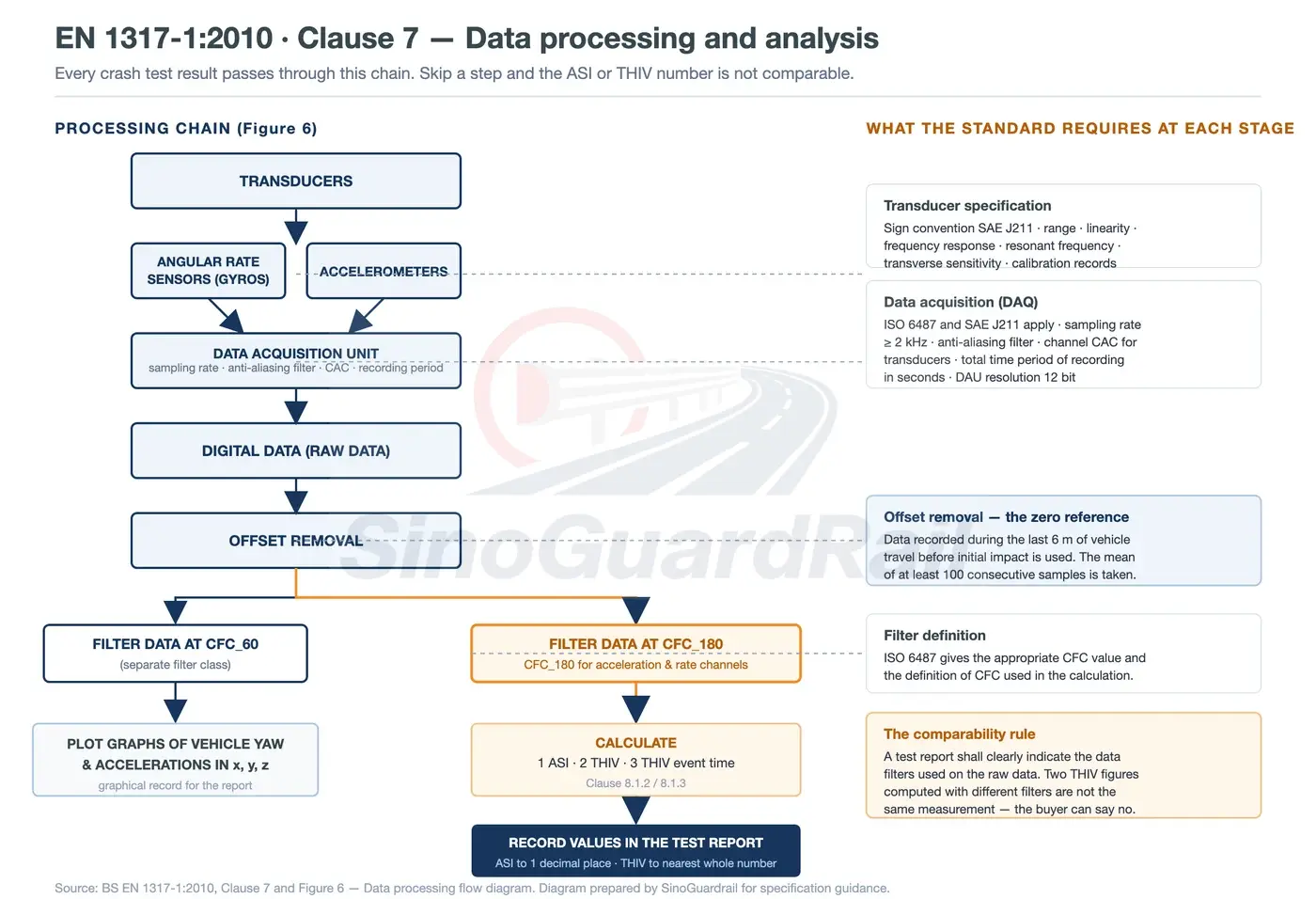
BS EN 1317-1:2010 is the British adoption of EN 1317-1:2010, titled Road restraint systems - Terminology and general criteria for test methods. Its scope covers the measurement framework for road restraint products under impact and impact-severity conditions. At a practical level, it addresses the common language, test-site information, test-vehicle preparation, vehicle instrumentation, data processing, crash-impact recording and vehicle cockpit deformation index used in the test method.
This means Part 1 is not a product catalogue or a shortcut for selecting a rail thickness. A product quotation should still identify the complete assembly requested by the project: rail profile, post type and spacing, blockout or spacer, fasteners, terminals, transitions, installation detail and surface-protection requirement.
For a broad explanation of the EN 1317 family and the main road restraint system terms, read our EN 1317 road restraint systems guide. This article has a narrower purpose: reviewing the test-method and report evidence behind a claimed barrier configuration.
How the main EN 1317 parts differ
| Standard part | Primary role | Buyer should verify |
|---|---|---|
| EN 1317-1:2010 | Terminology and general criteria for test methods, including measurement and reporting inputs. | Whether the report identifies the tested system, vehicle, instrumentation and recorded results clearly. |
| EN 1317-2:2010 | Performance classes, impact-test acceptance criteria and test methods for safety barriers, including vehicle parapets. | The containment, working-width, vehicle-intrusion and impact-severity requirements stated by the project. |
| EN 1317-5 | Product requirements and conformity-evaluation provisions for vehicle restraint systems. | The documents expressly required by the project, authority and destination market. |
Do not use the phrase "EN 1317 compliant" by itself as a purchasing specification. It does not identify the required part, performance class, test report, drawing revision or delivery configuration. The buyer should state the exact project requirement and request evidence that corresponds to it.
What to review in an impact-test method
EN 1317-1 creates a consistent measurement basis so that an impact-test result can be interpreted with the supporting test information. A report review should look beyond a headline containment class and confirm that the report identifies the key conditions under which the result was obtained.
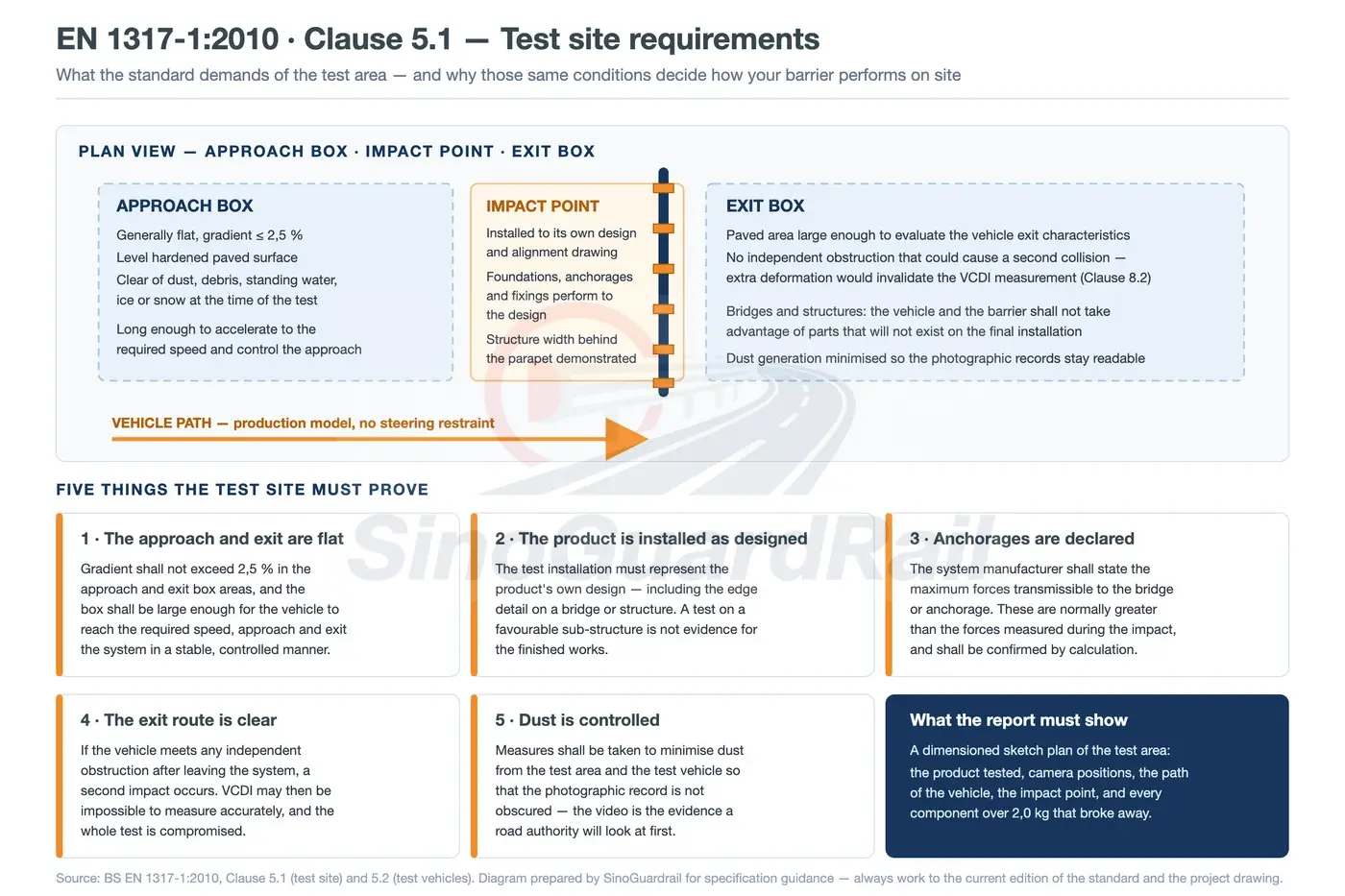
- Test item: barrier type, rail profile, posts, spacing, blockouts or spacers, hardware, terminals, transitions and any foundation or anchorage condition described in the report.
- Test vehicle: the vehicle category, test mass, speed and impact angle reported for the relevant test.
- Site and installation: the report's description of the test location, installed arrangement and any conditions relevant to the result.
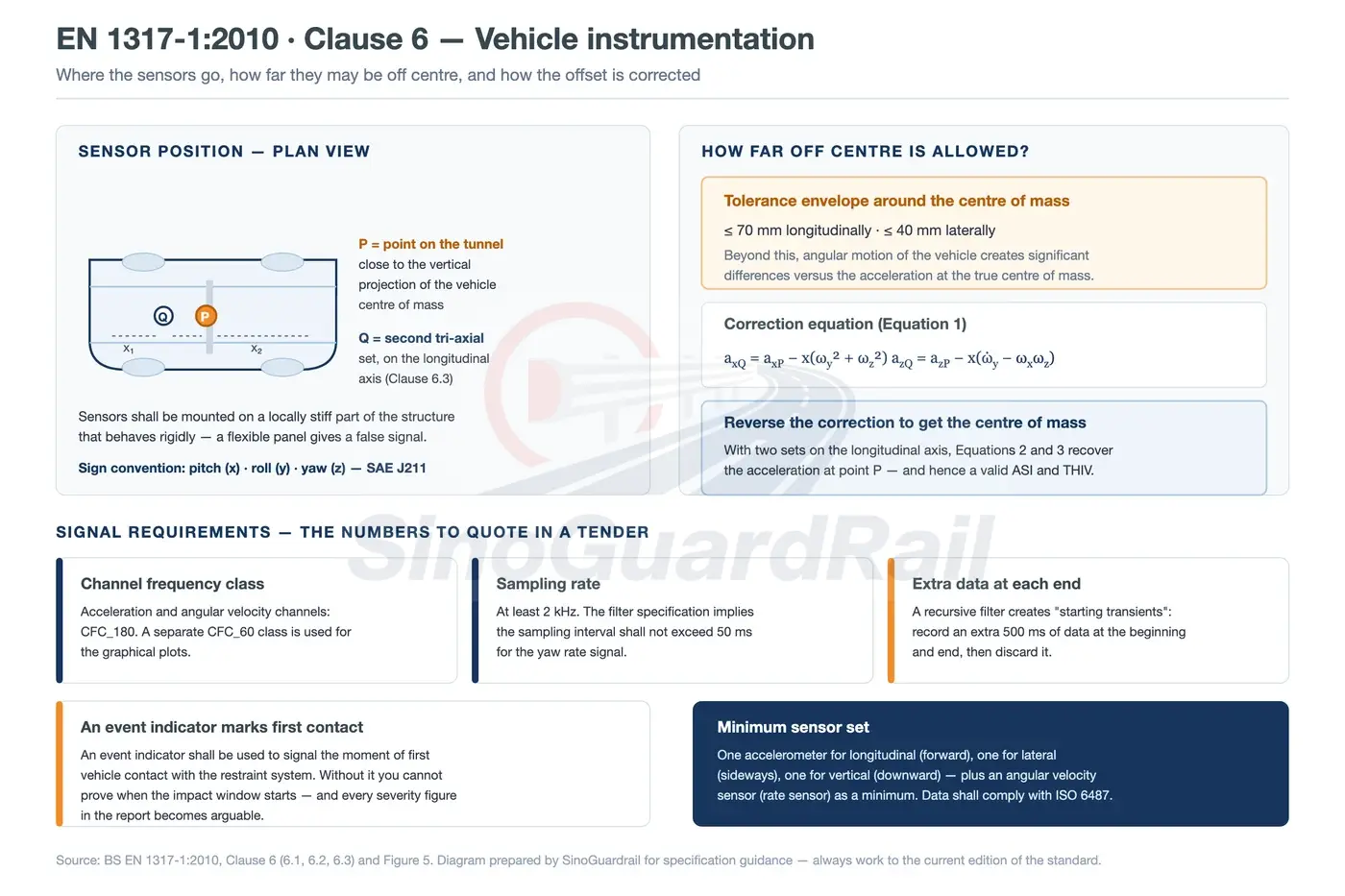
- Measurement chain: instrumentation, recorded data and the calculation or processing method identified in the test documentation.
- Results and observations: the stated containment outcome, deformation measures, vehicle behaviour, detached parts and other observations required by the applicable test criteria.
ASI, THIV and VCDI in plain language
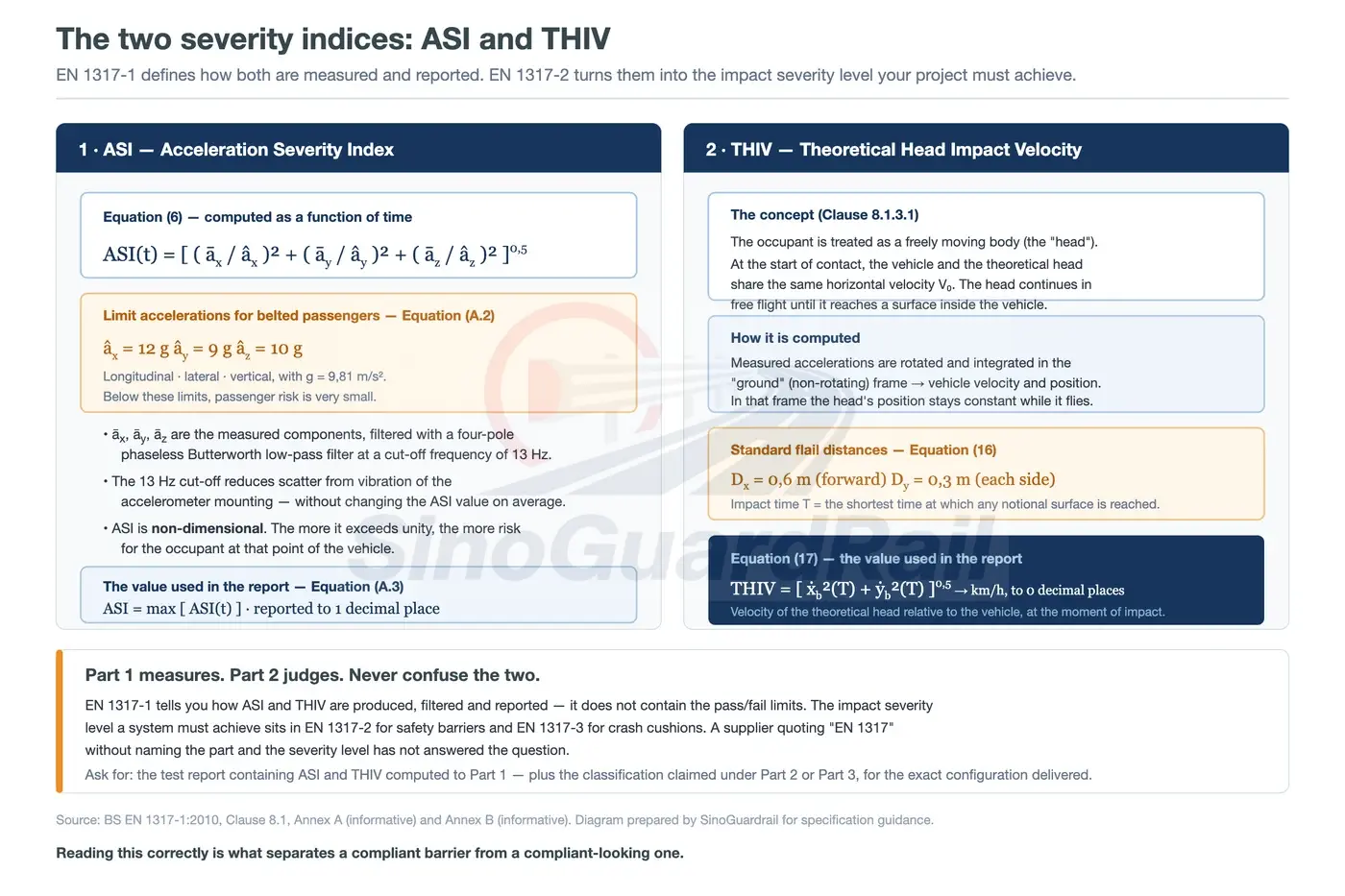
These abbreviations are often quoted in a barrier submittal, but none of them should be read in isolation. Their value comes from the documented test method, the stated configuration and the applicable acceptance criteria.
| Term | What it describes | Practical procurement check |
|---|---|---|
| ASI Acceleration Severity Index |
An index derived from vehicle accelerations during an impact. | Check the reported value, test identification and the impact-severity level required by the project. |
| THIV Theoretical Head Impact Velocity |
A calculated relative impact velocity used in the impact-severity assessment. | Confirm that the report states THIV where the applicable test or project requirement calls for it. |
| VCDI Vehicle Cockpit Deformation Index |
A structured description of deformation affecting the passenger compartment after the test. | Review the reported VCDI and supporting vehicle-damage information where relevant to the vehicle test. |
EN 1317-2 identifies impact-severity levels alongside other performance classes. A project engineer, authority specification or tender document determines which result is acceptable for a particular installation. A supplier should not infer that a different configuration has the same rating merely because its beam looks similar or uses a thicker steel section.
Crash-test report checklist for buyers
Use this as a commercial and technical review checklist. It is not a substitute for an engineer's approval or for the official test standard.
- Report identity: report number, issuing test body, date, version and the system name should be visible and internally consistent.
- Tested configuration: compare the report drawing or description with the offered rail, posts, spacing, blockouts, hardware, terminals and transitions.
- Impact conditions: confirm the report identifies the test vehicle, vehicle mass, impact speed and impact angle used for the relevant result.
- Performance result: compare the reported containment, working width, vehicle intrusion and impact-severity information against the project requirement.
- Installation context: check whether the report describes an arrangement that differs materially from the proposed site installation, such as a bridge, retaining wall or soil-installed run.
- Assembly evidence: request the offered configuration drawing and BOQ, then make sure the document revision matches the quotation.
- Production and compliance documents: request only the declarations, factory-control evidence and material records expressly required by the contract and destination market.
Why configuration matching matters
A crash-test result is associated with the tested barrier arrangement. Changing a post profile, post spacing, rail height, blockout, bolt arrangement, terminal, transition, foundation condition or other stated component may change the system response. Treat a test report as evidence for the configuration it documents, not as a blanket approval for every visually similar component.
That distinction is particularly important when an RFQ combines product descriptions from several catalogues. Use the guardrail components BOQ checklist to identify the system items that should be aligned. For product-level specifications, use the relevant W-Beam guardrail, Thrie-Beam guardrail, guardrail post and guardrail accessories pages.
Bridge and transition applications need separate attention because the installation detail may be critical to the applicable evidence. See the product-context pages for bridge guardrails and Thrie-Beam transitions, then have the responsible project engineer confirm the proposed arrangement.
How to state EN 1317 requirements in an RFQ
Instead of asking for a generic "EN 1317 guardrail," request a documented project configuration. A clear RFQ reduces the risk that a quotation is based on assumptions that do not match the tender.
RFQ wording template
"Please quote the road restraint system shown on the approved drawing and BOQ. State the applicable EN 1317 requirement named in the project documents; identify the complete rail, post, blockout or spacer, fastener, terminal and transition configuration; provide the relevant report or declaration requested by the contract; and confirm the drawing revision, coating, quantities, packing and delivery destination used for the quotation."
For North American material specifications, do not substitute an EN 1317 performance claim. Refer instead to the project's required standard and the appropriate product documentation, such as our AASHTO M180 W-Beam guide. Where a buyer needs a configuration review before quotation, send the drawing, BOQ, required standard, component list, coating requirement, quantities and destination through the contact page.
Questions buyers ask
What is the difference between EN 1317-1 and EN 1317-2?
EN 1317-1 provides terminology and general criteria for test methods. EN 1317-2 specifies performance classes, impact-test acceptance criteria and test methods for safety barriers, including vehicle parapets. They should be read with the project specification and any other applicable parts of the EN 1317 series.
Does a galvanized W-Beam alone prove EN 1317 performance?
No. A galvanizing or steel-material document addresses a component requirement. It does not by itself show that a complete barrier arrangement has the performance stated in a project requirement. Review the complete configuration and the evidence requested by the contract.
Can a buyer use a report for a different post spacing?
Do not assume so. A difference in post spacing or another component can be material to system behaviour. Compare the offered drawing with the documented test configuration and obtain written project-engineer confirmation before accepting a substitution.
Which source should control a project decision?
The approved project documents, the applicable licensed standard and the responsible project authority or engineer control the decision. This page is a procurement review guide, not a substitute for them.
Official standard references
- BS EN 1317-1:2010 - Road restraint systems: terminology and general criteria for test methods
- BS EN 1317-2:2010 - Performance classes, impact-test acceptance criteria and test methods for safety barriers including vehicle parapets
Request a Drawing-Based Configuration Review
Send the approved drawing, BOQ, required standard, component list, coating requirement, quantities and destination. We will review the requested product configuration before quotation.
Send Project DocumentsEditorial note: This article summarizes procurement considerations based on the scope of BS EN 1317-1:2010 and related EN 1317 references. It does not reproduce the standard or provide project-specific engineering approval. Obtain the official standard and follow the approved project documents.