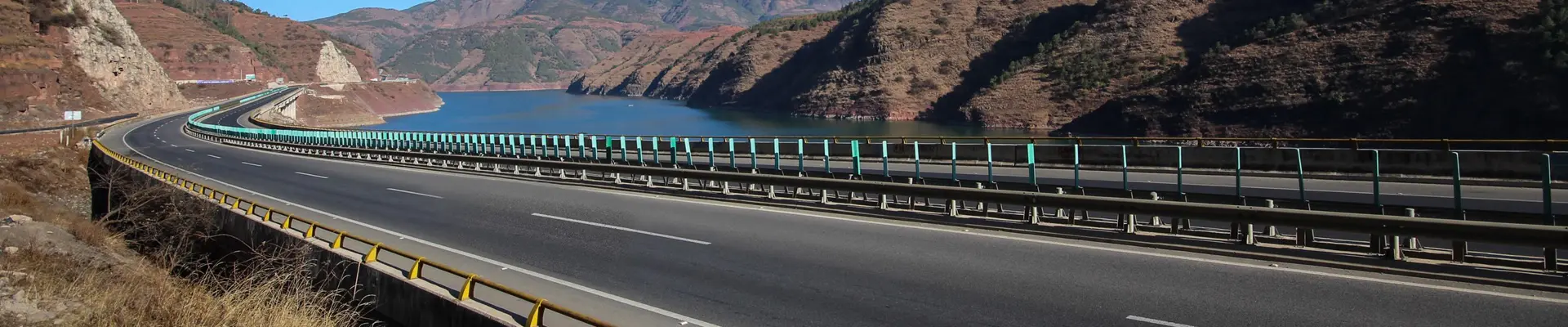
EN 1317 evaluates complete road restraint systems, not only the steel rail profile. Posts, terminals, transitions, working width and tested performance all matter.
EN 1317 is the European standard family used to classify road restraint systems such as safety barriers, vehicle parapets, crash cushions, terminals and transitions. For a guardrail buyer, the useful question is not simply "Is this rail EN 1317?" A better question is: "What tested system, containment level, impact severity and working width does this road section require?"
Article navigation
What Is EN 1317?
EN 1317, often written as EN1317 in project documents, is a European Norm for road restraint systems. It gives a common language for crash testing, performance classes and conformity evaluation. In practice, it helps road authorities, designers and contractors compare different vehicle restraint systems by tested performance instead of by shape or steel weight alone.
This is an important distinction. A W beam guardrail, a thrie beam barrier, a bridge parapet and a crash cushion can all be part of roadside safety work, but EN 1317 asks how the complete system behaves in an impact. The rail, post, spacer, bolt, terminal and installation layout are treated as a system.
What EN 1317 Does Not Do
EN 1317 does not tell every country which barrier must be used on every road. National regulations and the project designer normally decide the required containment level, working width and installation details according to road speed, traffic mix, roadside hazards and available space.
Main Parts of the EN 1317 Standard Family
Different parts of EN 1317 cover different road restraint products. If your tender only says "EN 1317 compliant", ask which part, which edition and which performance class are required. That small question prevents many procurement mistakes.
| Standard Part | What It Covers | Why Buyers Should Care |
|---|---|---|
| EN 1317-1 | Terminology, test methods, vehicle specification, instrumentation and general impact test criteria. | It explains how crash test data is measured and reported. It is the base language for the other parts. |
| EN 1317-2 | Safety barriers and vehicle parapets, including containment level, working width, vehicle intrusion and impact severity. | This is the part most often discussed for steel highway guardrails and bridge barriers. |
| EN 1317-3 | Crash cushions, including performance classes and impact test acceptance criteria. | Use this when the project includes gore areas, terminal protection or energy-absorbing crash cushions. |
| ENV 1317-4 / EN 1317-7 | Terminals and transitions. Older specifications may still cite ENV 1317-4; newer documents may refer to EN 1317-7 for terminals. | Check the contract version carefully, especially at bridge approaches and barrier ends. |
| EN 1317-5 | Product requirements, conformity evaluation, factory production control and durability declarations for vehicle restraint systems. | This part is closely connected with CE marking and product documentation for systems placed on the European market. |
| CEN/TR 1317-6 | Pedestrian restraint systems and pedestrian parapets on bridges, footbridges and similar elevated structures. | Do not confuse pedestrian parapet requirements with vehicle restraint performance. |
Key EN 1317 Terms Explained in Plain English
Most confusion around EN 1317 comes from reading a performance class as if it were a product size. It is not. A performance class is the result of tests and measured behavior.
Containment level The ability of a barrier to contain and redirect a vehicle under defined test conditions. N2, H1, H2, H3 and H4 levels indicate increasing impact demand.
Impact severity A, B or C rating linked to occupant risk. It is mainly assessed through ASI and THIV. Class A is generally more forgiving to occupants than B, and B more than C.
Working width The space the system needs during impact, measured from the traffic face to the farthest dynamic position of the system. This affects how close the barrier can be to a hazard.
Containment Level
Containment level is the headline figure many people notice first. For example, N2 is often used for normal containment, while H levels are used where higher containment is needed. L classes were introduced to include an additional medium vehicle test for higher containment barriers, giving designers a broader picture than a light car and heavy vehicle test alone.
| Common Level | Typical Reading in a Project | Practical Procurement Note |
|---|---|---|
| N1 / N2 | Normal containment for many roadside barrier applications. | Confirm whether the project asks for N1 or N2 and whether the system has the required test report, not only similar rail dimensions. |
| H1 / H2 / H3 | Higher containment where heavier vehicles, higher risk or more severe consequences are expected. | Check posts, rail type, installation height, soil/foundation detail and working width. The rail alone is not enough. |
| H4a / H4b | Very high containment, often considered for bridges, structures or locations with serious hazards behind the barrier. | Bridge anchorage, vehicle intrusion and available clearance become critical. |
| L1 to L4 | Higher containment classes including an additional medium passenger vehicle test. | If the tender names an L class, do not substitute an H class without written approval from the designer or authority. |
ASI and THIV
ASI means Acceleration Severity Index. It is calculated from the acceleration measured in the test vehicle during impact. THIV means Theoretical Head Impact Velocity. It estimates how severe the occupant head movement would be inside the vehicle during the collision. Together, ASI and THIV help define the impact severity class.
Older references may mention PHD, or Post-Head Impact Deceleration. In the updated EN 1317 approach, PHD was removed from the main impact severity calculation, which is why recent documents focus mainly on ASI and THIV.
Working Width and Dynamic Deflection
Working width is one of the most practical numbers on a datasheet. A barrier with a high containment level but a large working width may not fit where the hazard is close behind the rail. Dynamic deflection is the movement of the barrier during impact. For contractors, these values matter when the barrier is installed near a bridge pier, retaining wall, ditch, slope, sign foundation or pedestrian area.
| Working Width Class | Maximum Normalized Working Width | What It Means on Site |
|---|---|---|
| W1 | 0.6 m | Very limited movement, useful where space behind the barrier is tight. |
| W2 | 0.8 m | Still compact, but always check the exact tested system. |
| W3 | 1.0 m | Common design range for constrained roadsides. |
| W4 | 1.3 m | Needs more clearance behind the barrier. |
| W5 | 1.7 m | May suit open shoulders but needs hazard clearance review. |
| W6 | 2.1 m | Check carefully near structures, slopes and medians. |
| W7 | 2.5 m | Usually unsuitable where the hazard is close behind the rail. |
| W8 | 3.5 m | Large movement envelope. The roadside layout must allow it. |
Vehicle Intrusion and Redirection
Vehicle intrusion is the maximum lateral position of the vehicle during impact, measured from the traffic face of the vehicle restraint system. It can be larger than the barrier movement itself, especially for higher containment tests involving heavy vehicles. Redirection means the system should guide the vehicle back in a controlled way instead of letting it cross, roll over or snag dangerously.
For steel guardrail procurement, EN 1317 performance depends on the tested system: rail, posts, spacers, terminals, transitions and installation conditions.
How EN 1317 Connects with Guardrail Products
For a manufacturer or supplier, EN 1317 is not a shortcut for saying "the steel is strong". It is about verified system behavior. A galvanized steel rail can be manufactured to a drawing, steel grade and coating requirement, but an EN 1317 performance claim should always be tied to the tested configuration and its documentation.
When your project includes normal roadside protection, start with the correct W beam guardrail profile, thickness, post spacing and coating specification. For higher-risk sections such as bridge approaches, narrow medians and heavy-vehicle routes, the design may call for stronger rails, tighter post spacing, a bridge guardrail or a properly detailed transition.
Do not overlook the small parts. Guardrail posts, spacers, splice bolts, anchorages and guardrail accessories decide whether the installed system matches the drawing. If the road section needs energy absorption or impact guidance at a curve, gore area or terminal zone, compare whether a roller barrier or crash cushion style solution is more suitable than a standard barrier run.
For a broader view of available roadside safety products, you can also review the full Sinoguardrail product range before preparing the final BOQ.
RFQ Checklist for EN 1317 Guardrail Projects
A clear RFQ saves time because it forces the standard, drawing and site conditions to line up before production. For EN 1317 related work, include the following information whenever possible:
Project country and road authority: National rules may decide the minimum containment level and working width.
Required EN 1317 part and edition: For example EN 1317-2 for safety barriers or EN 1317-3 for crash cushions.
Performance class: Containment level, impact severity class, working width, dynamic deflection and vehicle intrusion.
Drawings and BOQ: Include rail profile, post type, post spacing, terminal layout and transition details.
Material specification: Steel grade, rail thickness, bolt grade and coating requirement such as hot-dip galvanizing to the specified standard.
Site condition: Shoulder width, slope, structure, soil or foundation requirement, nearby hazards and installation constraints.
Documentation request: Test reports, product drawings, installation manual, factory production control records and packing list.
Common Mistakes to Avoid
Calling a rail profile "EN 1317" by itself: EN 1317 classifies tested systems. A loose rail, post or accessory is only one component unless it is part of the tested configuration.
Ignoring working width: A barrier can meet a high containment level but still need more space behind it than the road has available.
Mixing tested and untested components: Changing post type, rail height, bolt layout, spacer block or terminal can change impact behavior. Treat substitutions carefully.
Forgetting transitions: Bridge approaches, concrete barrier connections and terminal zones often need special transition parts. A simple guardrail line item may not include them.
Confusing product conformity with site approval: CE marking or product documentation does not replace project design approval, installation inspection or national road authority requirements.
Need Help Matching Guardrail Supply to EN 1317 Project Requirements?
Send your drawings, BOQ, required containment level, working width class, material specification and destination port to Sinoguardrail. We can help review the guardrail system, posts, accessories, packing plan and quotation details before production.
Contact Sinoguardrail for a project quotation
FAQ About EN 1317 Road Restraint Systems
Is EN 1317 the same as a guardrail material standard?
No. EN 1317 is mainly a performance and conformity standard family for road restraint systems. Material standards, coating standards and project drawings still need to be checked separately.
Does EN 1317 decide whether I need N2, H2 or H4?
No. EN 1317 defines how systems are tested and classified. The required level is normally chosen by the road authority, designer or national guideline according to risk, speed, traffic and roadside hazards.
Can a W beam guardrail be used in an EN 1317 project?
Yes, if the complete system and documentation meet the project requirement. The buyer should confirm the tested configuration, not only the W beam rail shape.
What is the difference between working width and vehicle intrusion?
Working width is related to the movement envelope of the restraint system during impact. Vehicle intrusion is the lateral position reached by the impacting vehicle. Both matter when hazards are close behind the barrier.
What should I send to get an accurate quotation?
Send the project standard, drawings, containment level, working width, rail thickness, post type, accessories, coating requirement, total quantity and destination port. If the drawings are not ready, send the road section details first.