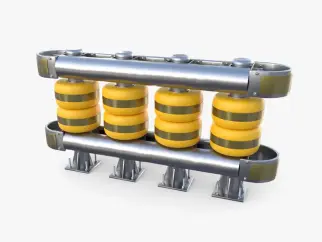


A project-specific roller barrier configuration supported by controlled MASH 2016 TL-4 technical documentation. Configuration matching, document access and project submittals are handled through a qualified review process and the applicable confidentiality requirements.
The MASH TL-4 reference applies only to the complete system configuration covered by the applicable technical documentation. It does not automatically apply to every roller size, post, rail, foundation, terminal or customized layout.
Before quotation, SinoGuardrail reviews the buyer's specification against the controlled system drawings and bill of materials. Any proposed change must be identified and technically evaluated before a performance statement is used in a project submittal.
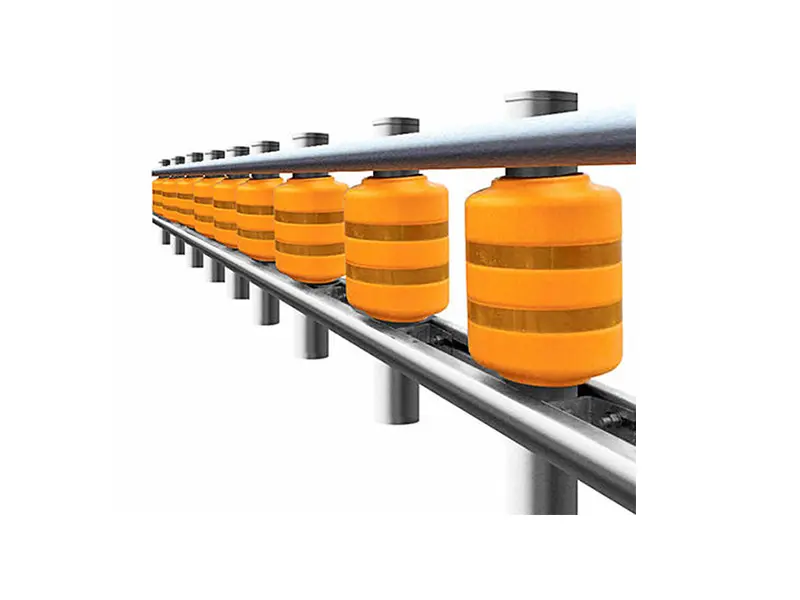
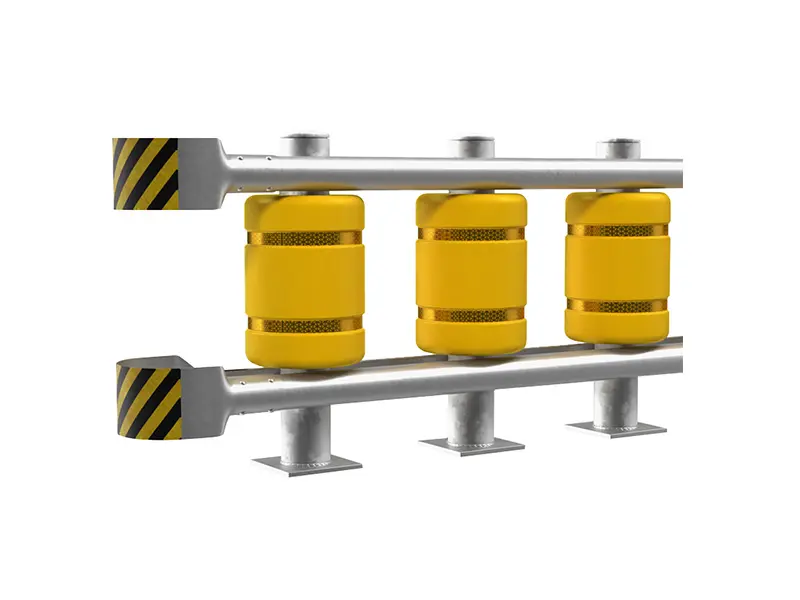
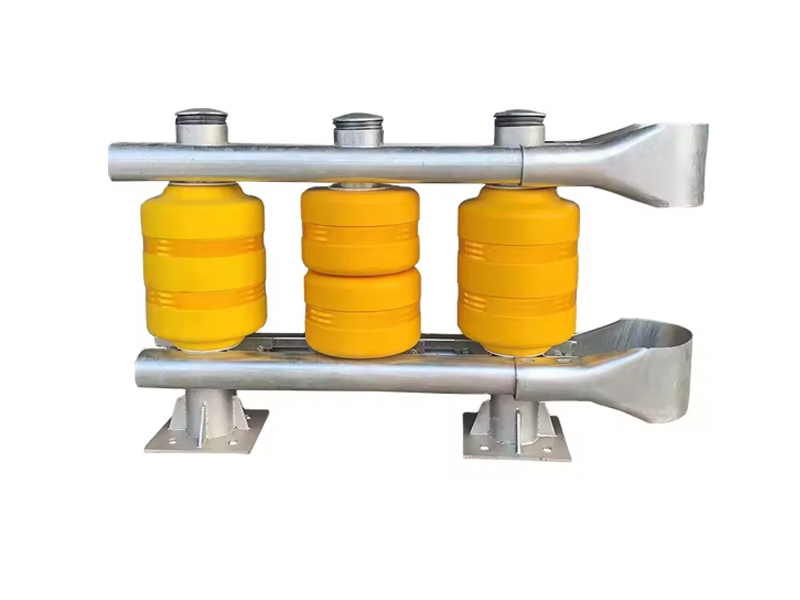
The system combines rotating polymer barrels with steel posts, upper and lower longitudinal members, internal turning components, connectors, fasteners, terminals and the specified foundation or anchoring arrangement. These parts work as one vehicle-restraint assembly and should not be assessed independently.
During contact, the barrels are intended to rotate while the steel framework forms the structural restraint. Actual performance depends on the complete documented geometry, material specification, installation details, terminals and transitions.
Detailed test information is not published on this page because access is governed by project confidentiality. For a qualified tender or engineering review, the document process is handled according to the applicable confidentiality terms and the buyer's submittal requirements.
Confirm the tender, road authority, required performance level, proposed location and intended system length.
Compare the requested posts, rails, barrels, spacing, terminals, transitions and foundation with the controlled configuration.
Agree which drawings, material documents and supporting evidence may be reviewed or submitted under the applicable restrictions.
| Item | Project Requirement |
|---|---|
| Performance Reference | MASH 2016 TL-4, limited to the configuration covered by the applicable controlled documentation |
| System Scope | Complete assembly including barrels, posts, longitudinal members, rotating components, connectors, fasteners, terminals and specified foundation details |
| Materials | Q235/Q345 steel and EVA/PU roller options are available within the wider product family; the project configuration must follow its approved bill of materials |
| Steel Surface | Hot-dip galvanized, with the required coating specification confirmed in the approved project documents |
| Dimensions and Spacing | System height, width, post section, rail section, barrel dimensions and post spacing follow the controlled drawing; no universal size is stated for all TL-4 projects |
| Terminals and Transitions | Must match the reviewed end treatment and adjoining barrier arrangement; substitutions require technical review |
| Foundation / Anchoring | Prepared according to the reviewed installation drawing and site conditions |
| Customization | Possible for project supply, but a modified design must not automatically be represented as the documented TL-4 configuration |
| Document Access | Managed through a controlled project review in accordance with confidentiality and authorization requirements |
The project bill of quantities may include:
Rotating barrels and internal turning components
Structural posts, sleeves and caps
Upper and lower longitudinal steel members
Connecting frames, spacers and brackets
Bolts, nuts, washers and fixing hardware
Terminal and transition components
Reflective elements and project identification marks
Agreed spare barrels and replacement hardware
A TL-4 inquiry should include more than the required barrier length. The following information is needed to determine whether the documented configuration is suitable for the tender and site.
Plan and elevation, total length, alignment, available working width, nearby structures and site photographs.
Specified standard, performance level, material and coating requirements, required approvals and submittal schedule.
Foundation conditions, drainage, terminals, transitions, adjoining barriers, bridge or concrete interfaces and access for installation.
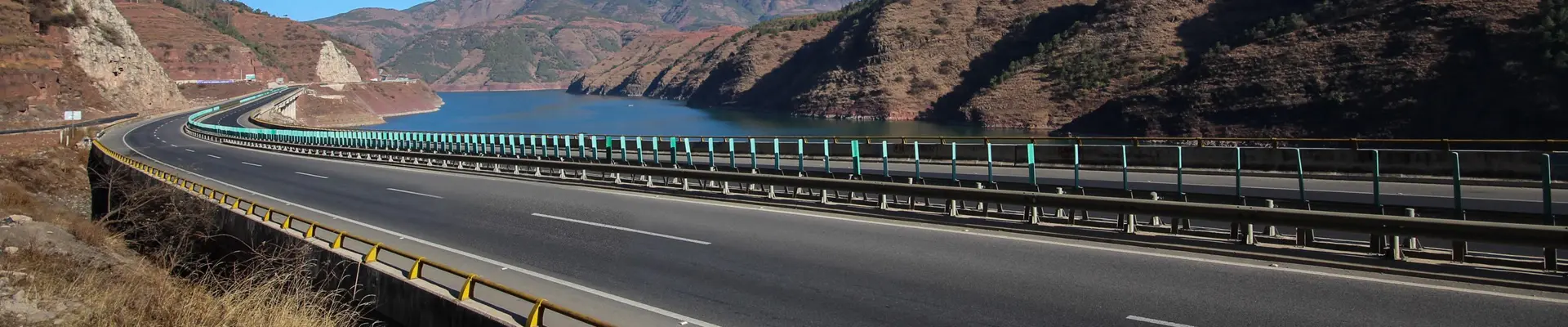
Curved roads, ramps, medians, bridge approaches and other constrained roadside locations may be considered during project design. Suitability is not determined by the photograph or product name alone; it must be confirmed against the road authority's design, the available site geometry and the documented system boundary.
Configuration control: component drawings and quantities are checked against the approved project list before production.
Dimensional inspection: posts, rails, holes, connectors and fasteners are checked to the approved manufacturing drawings.
Surface inspection: galvanized steel surfaces and roller appearance are checked before packing; project-specific inspection points can be agreed in the order.
Component identification: bundles, pallets and hardware packages can be marked by section or component code for site receiving.
Spare-part planning: replacement barrels, connectors and fasteners can be listed separately in the BOQ.
Detailed document access is governed by confidentiality and authorization requirements. Qualified project reviews are handled through the applicable controlled process.
They can be manufactured for different projects, but a modified design must not automatically be described as the documented MASH TL-4 configuration. The requested changes require technical review.
No. MASH is an evaluation framework, and the evidence relates to a particular tested system configuration. Buyers should verify that the offered system matches the relevant documentation.
Send the tender specification, road drawings, required length, terminals and transitions, foundation details, required documents, quantity and destination port.
For projects that do not specify MASH TL-4, review the Safety Roller Barrier System page for drawing-based component options and RFQ requirements. The two pages represent different procurement needs and should not be treated as interchangeable.
Send the tender clause, project drawings, proposed layout, required length, terminals, foundation information, quantity and destination port. We will first confirm the project scope and configuration-matching process.
SinoGuardrail supplies highway guardrails and roller barrier systems for contractors, distributors and infrastructure project buyers in Southeast Asia, the Middle East, Africa and South America.
Contact: Mr.Zhang
Phone: +86 13306356181
Email: [email protected]
Add: Guanxian Economic Development Zone, Liaocheng City, Shandong Province, China
We chat