Choosing the right road safety barrier is not only a product decision. For contractors, distributors and infrastructure project buyers, the correct choice affects project approval, installation cost, delivery planning, long-term maintenance and road user safety.
In many highway and road projects, buyers compare W-beam guardrails, Thrie-beam guardrails and roller barriers at the same time. Each system has a different role. A standard roadside section may only need W-beam guardrails, while bridge approaches, medians, curves, ramps or high-risk mountain roads may require stronger or more specialized barrier solutions.
This guide compares the main types of guardrails and explains how project buyers can choose between W-beam guardrail, Thrie-beam guardrail and roller barrier systems based on road conditions, target market, installation environment and procurement risk.
Types of Guardrails at a Glance
The main types of highway guardrails are W-beam, Thrie-beam, roller barrier, bridge guardrail and concrete barrier. The table shows where each type is normally used and what buyers should check.
| Guardrail type | Structure | Typical use | Buyer focus |
|---|---|---|---|
| W-beam guardrail | Two-wave steel rail on posts | General highways, rural and urban roads, roadside and median protection | Beam thickness, post type, spacing, coating, terminals and complete accessories |
| Thrie-beam guardrail | Three-wave steel rail, deeper and stiffer | Bridge approaches, medians and higher-risk sections | Profile size, transition sections, post strength and project drawings |
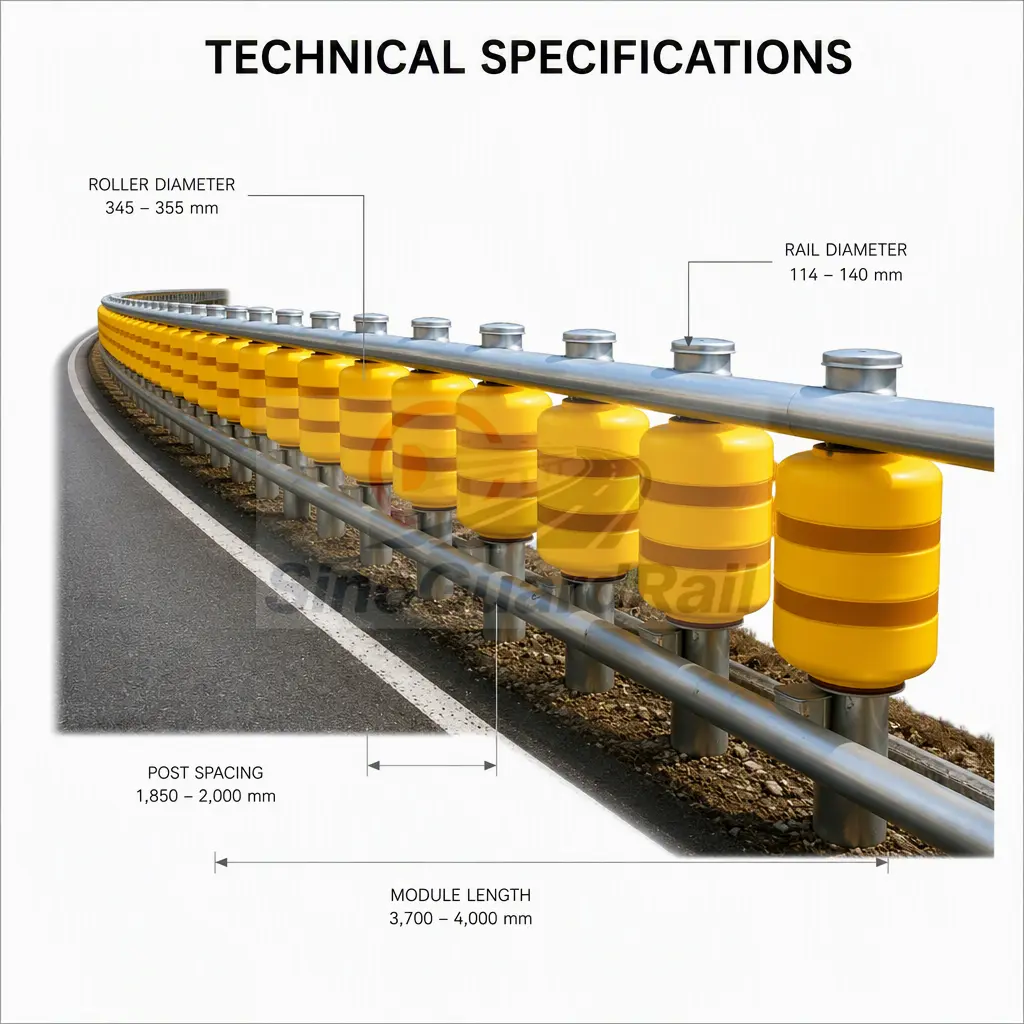
| Roller barrier | Rotating EVA/PU barrels on steel posts and rails | Sharp curves, ramps, mountain roads and accident-prone sections | Curve radius, roller spacing, posts, rails and technical review |
| Bridge guardrail | Steel barrier fixed to the bridge deck | Bridges and viaducts | Deck connection, base plates, anchor bolts and transitions to the roadside barrier |
| Concrete barrier | Rigid cast or precast concrete wall | Narrow medians and work zones where no deflection is allowed | Foundation, joints and end treatment (not supplied by SinoGuardrail) |
Start from the Road Section, Not Only the Product Name
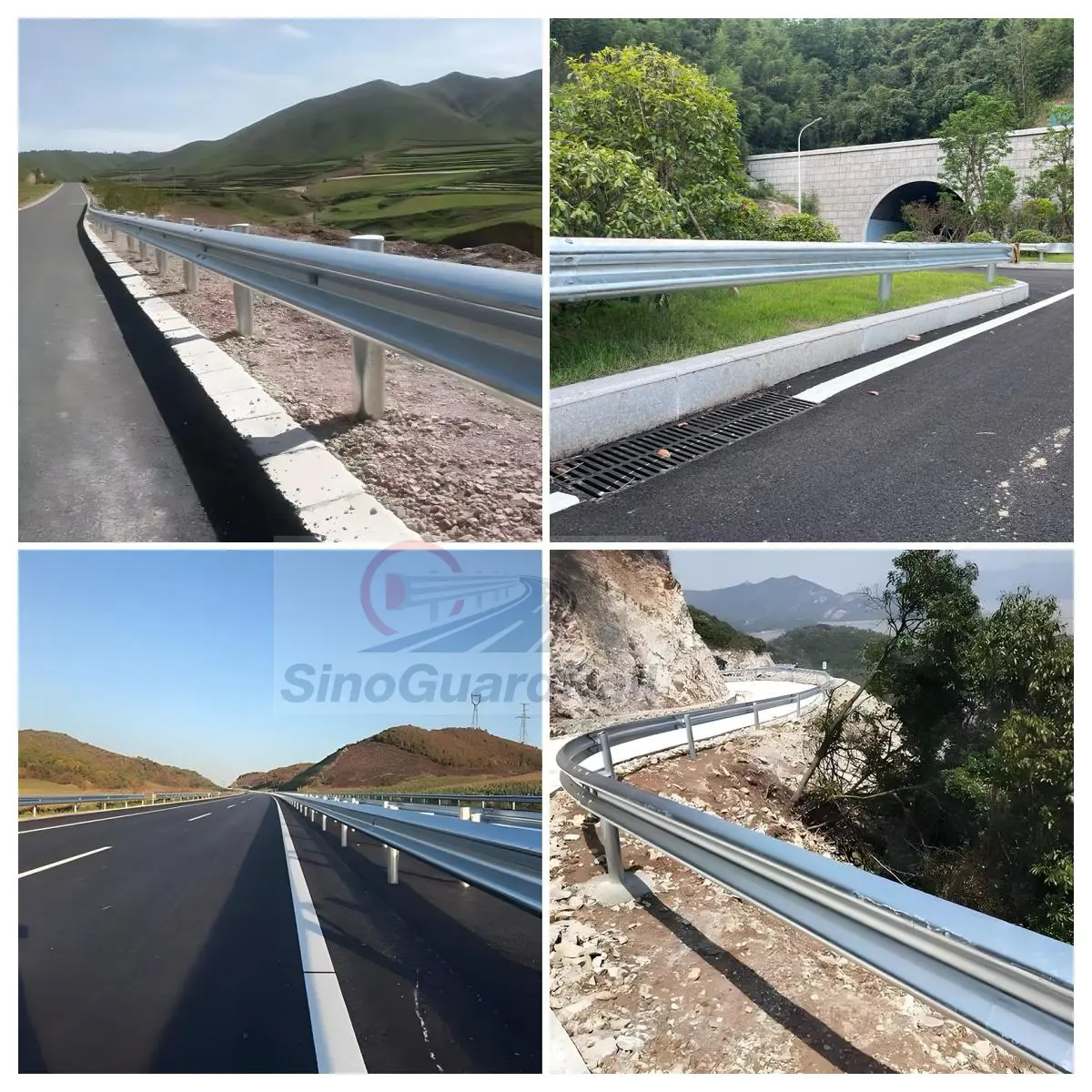
A common procurement mistake is to ask which product is “better” without describing the road section. In road safety barrier selection, the better product is the one that matches the project drawing, traffic condition, installation space and risk level.
Before choosing a system, buyers should first clarify:
- Is the road section straight, curved, mountainous, urban or bridge-related?
- Is the barrier installed on roadside, median, bridge approach, ramp or tunnel entrance?
- What is the expected traffic speed and vehicle type?
- Is there enough space for standard post installation?
- Does the project require a stronger beam profile or a special guidance system?
- Are there local road authority specifications or consultant requirements?
- What is the target country, destination port and project schedule?
Once these conditions are clear, the supplier can recommend a more practical solution and provide a more accurate quotation.
When to Choose W-Beam Guardrail
W-beam guardrail is commonly used for standard roadside and median protection. It is often the first choice for large-volume highway projects because it is widely recognized, easy to transport, practical to install and suitable for many general road sections.
Buyers usually consider W-beam guardrails for:
- Standard highway roadside protection
- Rural road and municipal road projects
- Median barrier sections
- Road improvement and replacement projects
- Long-distance highway projects with large quantities
- Projects requiring a cost-effective steel guardrail system
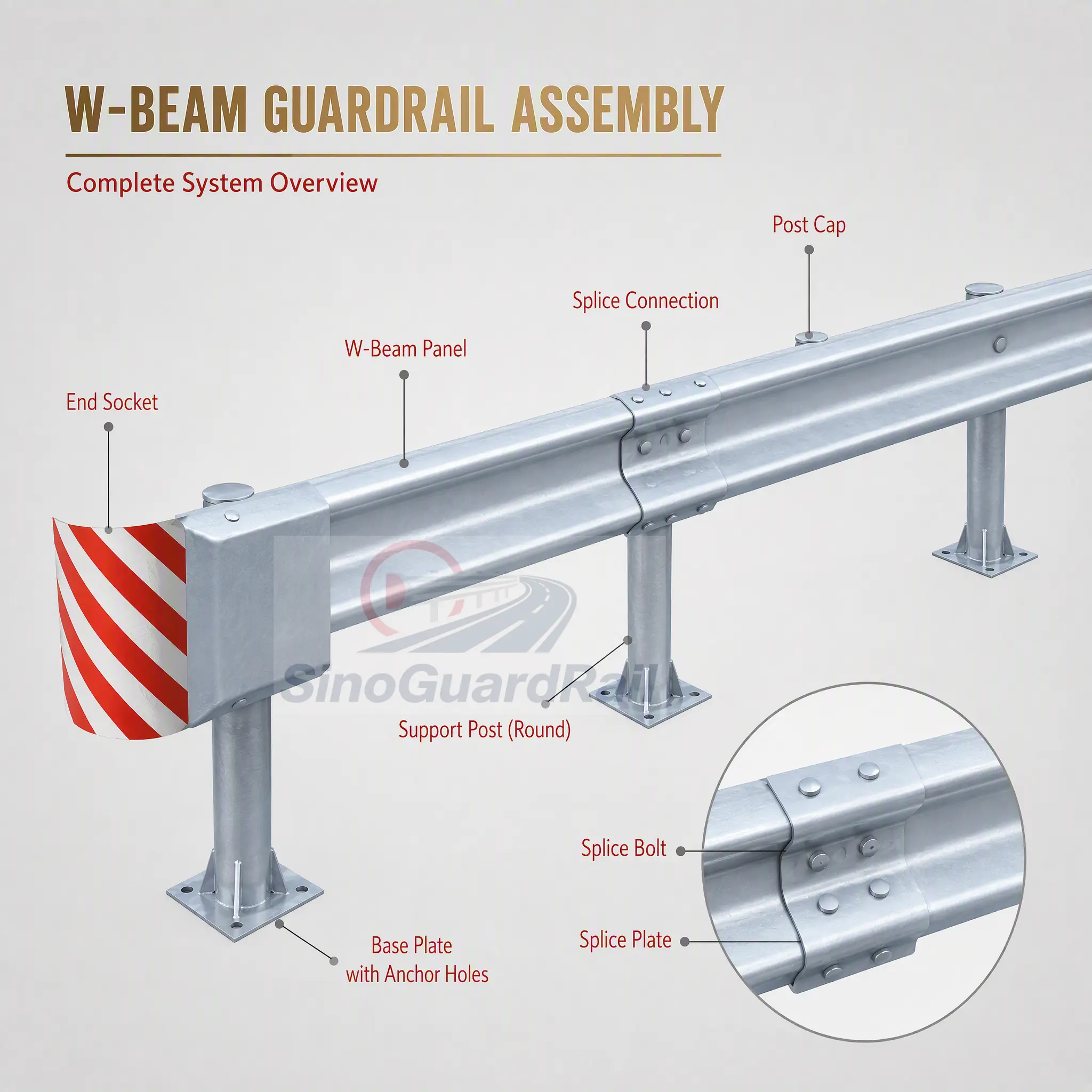
For W-beam procurement, the most important point is not only the beam price. Buyers should confirm the complete system, including beams, posts, spacers, bolts, terminal ends and other guardrail accessories.
When to Choose Thrie-Beam Guardrail
Thrie-beam guardrail has a deeper corrugated profile than W-beam guardrail. It may be considered for sections where the project requires a stronger or more rigid barrier profile, especially where the road design, consultant specification or authority requirement calls for it.
Buyers usually consider Thrie-beam guardrails for:
- Bridge approaches
- Median sections with higher containment requirements
- Road sections with larger vehicles or higher impact concerns
- Transitions between bridge parapets and roadside guardrails
- Sections where the drawing specifies Thrie-beam profile
A Thrie-beam quotation should clearly state the beam profile, thickness, length, hole pattern, post type, spacer or blockout design and transition components. If the project uses both W-beam and Thrie-beam sections, the transition design should be confirmed before production.
When to Choose Roller Barrier
Roller barrier is different from ordinary steel guardrail. It uses rotating barrels, steel rails and support posts to help guide vehicle movement along risky road sections. It is often considered for special locations where road geometry creates higher accident risk.
Buyers usually consider roller barriers for:
- Sharp curves
- Mountain roads
- Ramps and interchange sections
- Bridge approaches
- Tunnel entrances and exits
- Accident-prone road sections
- Locations where visual guidance is important
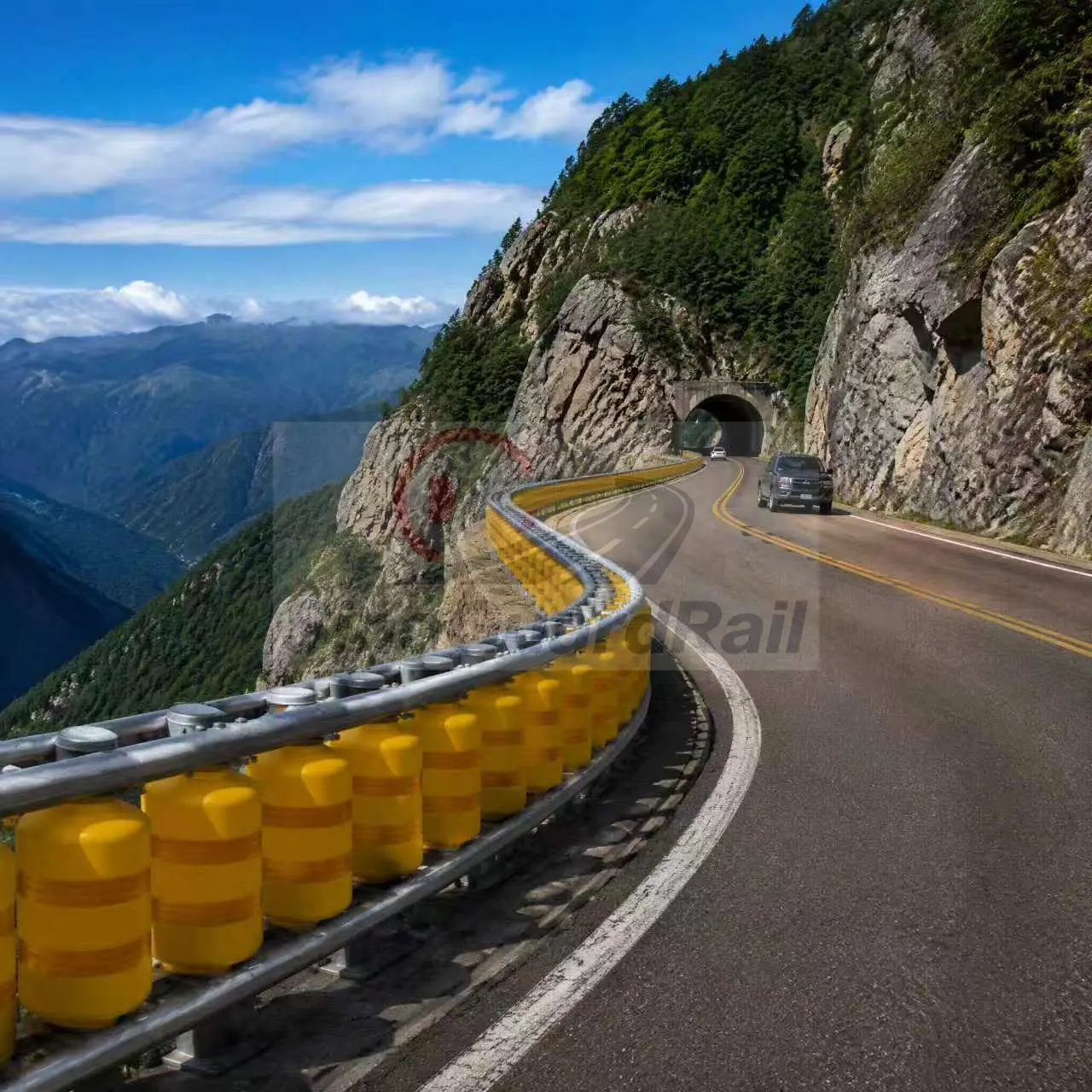
For roller barrier projects, road length alone is not enough for an accurate quotation. Buyers should provide road layout, curve radius, installation drawings, project location and photos if available. The supplier should review the actual road section before confirming the component quantity.
Market-Specific Selection Considerations
Target market conditions can affect product selection. Buyers in Southeast Asia, the Middle East, Africa and South America may have different road environments, logistics risks and project approval requirements.
| Market | Common road conditions | Selection focus |
|---|---|---|
| Southeast Asia | Tropical rainfall, coastal humidity, curves, bridges, ramps and urban roads | Coating, corrosion protection, project documents, roller barrier for curves and complete accessory lists |
| Middle East | Long highways, desert roads, high temperature and large-volume infrastructure projects | Large quantity supply, packing, beam thickness, post type, delivery schedule and full container loading |
| Africa | Remote roads, long inland transport, mixed road conditions and replacement difficulty | Durable coating, spare parts, complete accessories, clear packing labels and installation support |
| South America | Mountain roads, port delivery, bridges, curves and project-specific standards | Road geometry, transition design, coating requirement, technical drawings and logistics planning |
Product Selection for Southeast Asian Projects
Southeast Asia is one of the most important target markets for road safety barriers. Projects in Thailand, the Philippines, Singapore and Malaysia may involve highways, expressways, urban roads, bridge approaches, ramps and road safety upgrades.
For Thailand, mountain roads and highway curves may require special attention to road geometry. Roller barriers may be considered for high-risk curves, while W-beam or Thrie-beam guardrails may be used for standard highway and bridge sections.
For the Philippines, logistics can be as important as product selection. Island delivery, port transfers and multiple project locations require a clear packing list and complete component scope. Missing small parts can be costly to replace after shipment.
For Singapore, urban road conditions and limited installation space make technical drawings, dimensions and installation coordination especially important. Buyers should confirm exact components and interface details before production.
For Malaysia, tropical exposure, highways, bridges and regional port delivery require attention to galvanizing, coating, post design and installation method.
Buyers can also review the Southeast Asia Road Safety Barrier Market page for regional procurement information.
Key Technical Information to Confirm
Whether the buyer chooses W-beam, Thrie-beam or roller barrier, the RFQ should include enough technical information for accurate recommendation and quotation.
- Target country and project location
- Road type and application section
- Total barrier length
- Road layout and curve radius if applicable
- Required beam profile and thickness
- Post type, length and spacing
- Coating or galvanizing requirement
- Terminal and transition requirement
- Destination port and delivery schedule
- Available drawings, photos or project specifications
Do Not Compare Only the Price per Meter
A low price per meter can be misleading if the quotation does not include the same product scope. One quotation may include only the main beam, while another includes beams, posts, spacers, bolts, terminals and packing. These quotations are not equal.
Before comparing suppliers, buyers should ask:
- Is this quotation for beams only or a complete system?
- Are posts included?
- Are bolts, nuts and washers included?
- Are terminal ends included?
- Are transition sections included where needed?
- Are packing, loading and documentation included?
- Does the quotation match the project drawing?
For export projects, the safer choice is usually a complete system quotation with a clear bill of materials.
Coating and Corrosion Protection
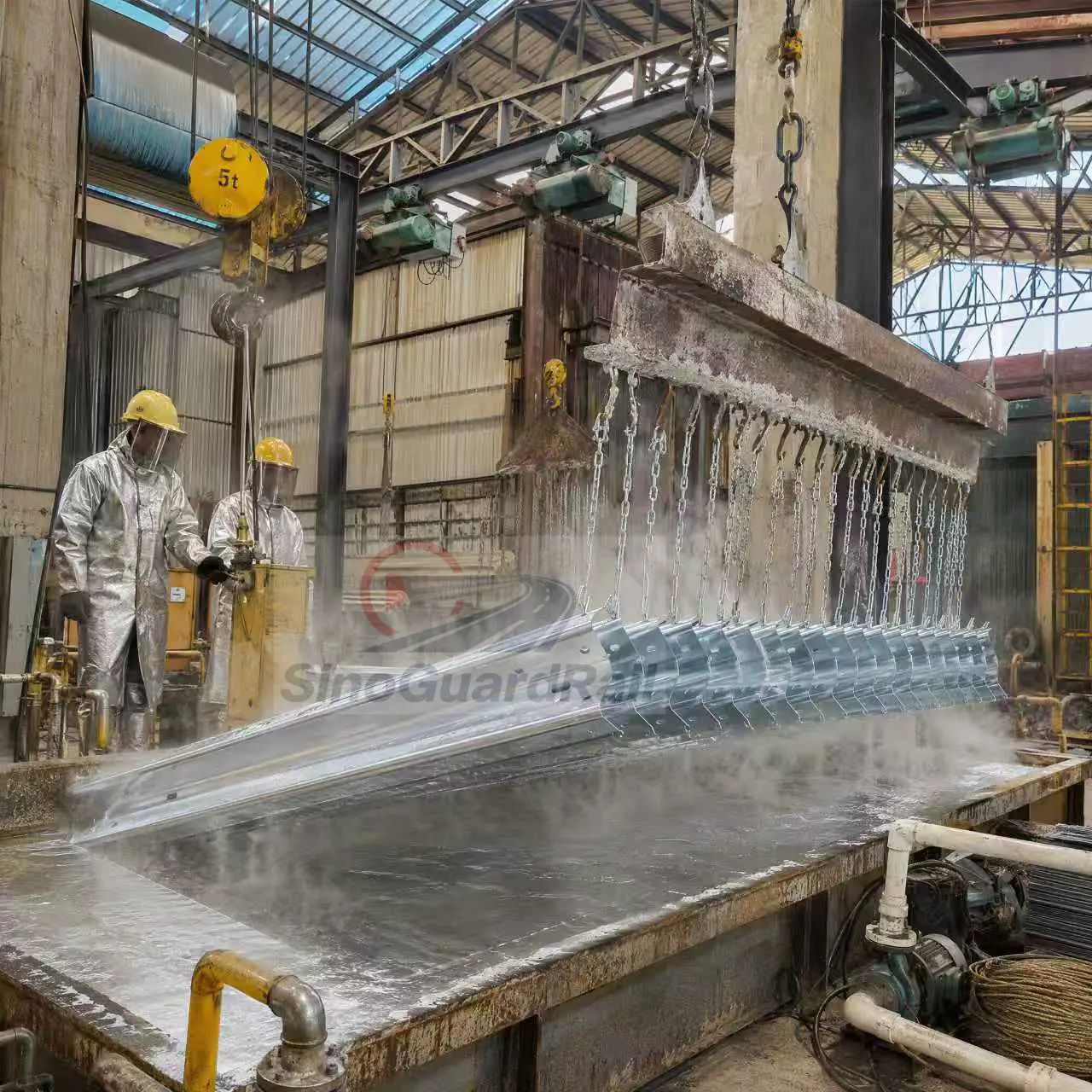
Coating is especially important for humid, coastal, tropical or long-service road projects. Buyers should confirm corrosion protection for all steel components, not only the main guardrail beam.
The coating requirement should cover:
- W-beam or Thrie-beam panels
- Posts
- Spacers or blockouts
- Bolts, nuts and washers
- Terminal ends
- Base plates and anchors
- Roller barrier steel rails and posts
How Sinoguardrail Helps Buyers Select the Right System
A practical supplier should not only send a price list. For project-based procurement, the supplier should help buyers review the road section, confirm the product scope and prepare a complete quotation.
Sinoguardrail can support buyers with:
- W-beam, Thrie-beam and roller barrier product options
- Component and accessory list review
- General drawings and technical information
- Coating and material confirmation
- Packing and container loading suggestions
- Export documentation support
- Project-based quotation for target markets
For buyers who are not sure which product to choose, sending the road section photos, drawings or project requirements is the best starting point.
Common Selection Mistakes
- Choosing only based on the lowest price per meter
- Using W-beam guardrail for every section without checking road risk
- Choosing roller barrier without providing curve or layout information
- Ignoring transition sections between different barrier systems
- Forgetting posts, bolts, terminal ends and accessories
- Not confirming coating requirements for coastal or tropical markets
- Ordering before drawings and component lists are reviewed
- Comparing quotations with different scopes
What to Include in a Guardrail BOQ
- Beam type (W-beam, Thrie-beam or roller barrier), length, effective length and quantity
- Steel grade, base-metal thickness and tolerances
- Post type, post spacing, embedment and connection details
- Spacers, brackets, splice bolts, post bolts and washers
- Terminals, end treatments, transitions and bridge connections
- Galvanizing or powder-coating requirement and inspection method
- Marking, packing, destination port and required documents
A complete BOQ lets the supplier quote the same system that is shown in the drawing. For posts, see the guardrail post types guide. For rail sizes, see W-beam guardrail dimensions and Thrie-beam guardrail dimensions.
Recommended Selection Process
| Step | What to do | Why it matters |
|---|---|---|
| 1 | Identify road section and application | Different road sections need different barrier solutions |
| 2 | Check project drawings or specifications | The final selection should follow project requirements |
| 3 | Choose W-beam, Thrie-beam or roller barrier | Each product line solves a different road safety problem |
| 4 | Confirm posts, accessories and terminals | Missing components can delay installation |
| 5 | Confirm coating, packing and shipping | Export projects need reliable corrosion protection and logistics planning |
Related Product Pages
Buyers can review the following product pages before preparing an RFQ:
- W-Beam Guardrails
- Thrie-Beam Guardrails
- Roller Barriers
- Highway Guardrails
- Guardrail Posts
- Guardrail Accessories
Frequently Asked Questions
Is W-beam guardrail enough for all road projects?
Not always. W-beam guardrail is widely used for standard road sections, but bridge approaches, medians, sharp curves or high-risk locations may require Thrie-beam guardrails, roller barriers or special transition designs.
When should I consider Thrie-beam guardrail?
Thrie-beam guardrail may be considered when the project requires a deeper beam profile, stronger barrier configuration or specific bridge and median applications. The final choice should follow project drawings and specifications.
When is roller barrier suitable?
Roller barrier is often considered for curves, ramps, mountain roads, tunnel entrances, bridge approaches and accident-prone sections where vehicle guidance is an important concern.
Can I mix W-beam guardrail and roller barrier in one project?
Yes, many projects may use different systems in different sections. However, the transition between systems should be reviewed before production.
What information should I send for a quotation?
Send the target country, road type, total length, drawings, curve information, required coating, destination port and any project specifications. Photos and sketches are also helpful if drawings are not available.
Can Thrie-beam replace W-beam without changing the design?
No. The beam profile affects the posts, spacers, connections, transitions and terminals. Any change should be reviewed and approved by the project engineer.
Conclusion
W-beam guardrail, Thrie-beam guardrail and roller barrier systems are not direct substitutes for every road condition. W-beam guardrail is suitable for many standard roadside and median applications. Thrie-beam guardrail may be used where a deeper and stronger beam profile is required. Roller barrier is often considered for curves, ramps, mountain roads and high-risk sections.
The best procurement decision starts from the project conditions. Buyers should confirm the road section, product scope, accessories, coating, packing and shipping requirements before placing an order.