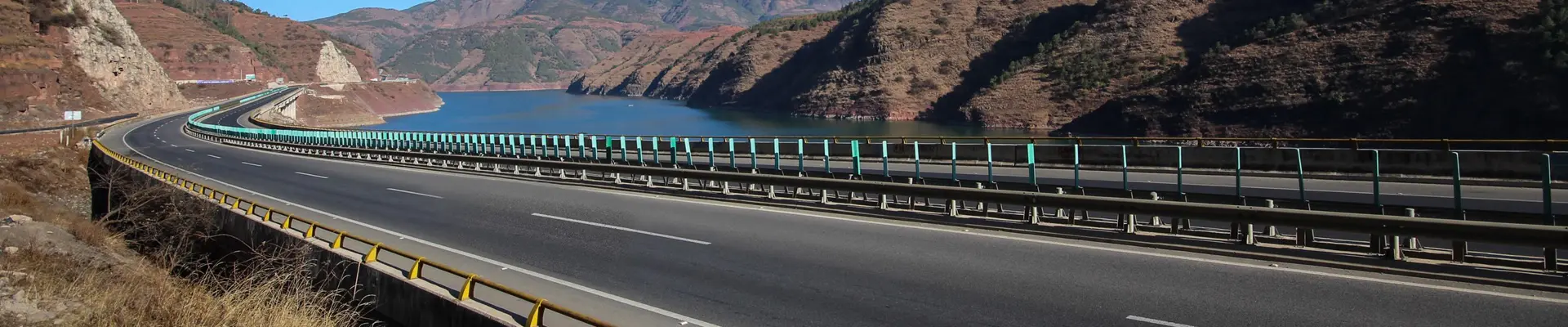
Plan W-Beam guardrail container loading from the approved packing list and verified cargo data, not from generic container capacities. Calculate bundle dimensions, gross weight, permissible payload, road limits, container condition, lashing points and destination rules before loading. The final stowage and securing plan must be confirmed by the responsible carrier, forwarder and loading team.
Conclusion: Use a documented stowage plan that keeps W-Beam bundles stable, protected and within the confirmed transport limits.
Applicable conditions: The plan varies with container type, carrier payload limit, road restrictions, rail dimensions, component mix, packaging and destination requirements.
Evidence: Check the container data plate, carrier instructions, approved packing list, gross weights, lashing plan and loading photographs before release.
Exception: Reference dimensions, volume figures and generic stacking examples cannot replace carrier approval or a project-specific cargo-securing plan.
Reference basis: IMO/ILO/UNECE Code of Practice for Packing of Cargo Transport Units (CTU Code). Apply the carrier's current requirements and the local rules governing the shipment.
W-Beam guardrail container loading requires a documented transport plan because the cargo is long, heavy and susceptible to handling damage. This guide covers 20GP and 40HQ selection, placement of panels, posts and fittings, weight distribution, packaging, securing and post-loading records. Whether the order uses hot-dipped galvanized W-Beam or a W-Beam specified with AASHTO M180 material requirements, confirm the applicable product documents and loading plan before shipment.
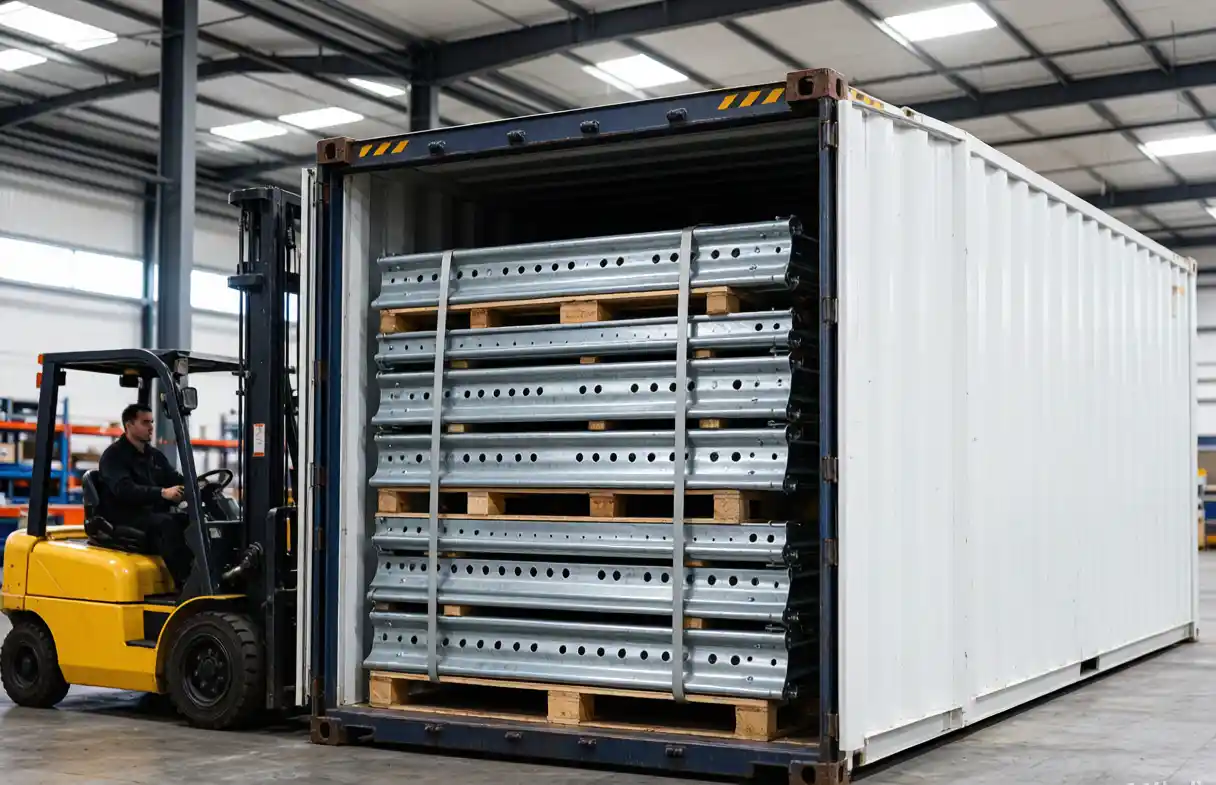
Proper W-Beam guardrail shipping is a logistics and cargo-securing task, not just stacking steel. Low space utilization can increase unit freight, while inadequate securing can lead to deformation, coating damage or cargo movement in transit. A sound loading plan balances space, weight and handling protection while following the carrier's cargo-securing requirements.
W-Beam guardrails can be planned efficiently when their profile, bundle size, coating type and complete component schedule are known. Use the verified packing list and container-specific dimensions to create a repeatable loading pattern for the shipment in question.
The two common types for export W-Beam guardrail shipments differ in internal dimensions and usable payload. Use the figures below only for early layout planning. Confirm the container's data plate, the carrier's payload limit and all road or port restrictions for the actual booking.
| Specification | 20GP | 40HQ |
|---|---|---|
| Internal dimensions | Approx. 5.90 x 2.35 x 2.39 m | Approx. 12.03 x 2.35 x 2.69 m |
| Effective volume | Approx. 33 CBM | Approx. 76 CBM |
| Payload limit | Confirm with carrier and route limits | Confirm with carrier and route limits |
| Best for | Samples or smaller orders when the verified payload and length are suitable | Larger orders when the verified payload and stowage plan are suitable |
| Key caution | Confirm rail length, payload and route restrictions | Confirm weight distribution, door-end restraint and approved lashing points |
For the full product range behind these shipments, visit our highway guardrail products page. Confirm applicable material, system and project documentation against the contract rather than relying on a generic product or certificate listing.
A disciplined crew follows the same sequence on every container. The method below maximizes space while keeping the load balanced and secure.
Position elongated W-Beam panels in the orientation specified by the approved stowage plan, normally along the container length where the bundle length permits. Determine bundle count, strap count and stack height from the verified rail dimensions, bundle weight, packaging design, container rating and securing method. Do not adopt generic stacking heights or bundle counts without this review. This is the core of a W-Beam guardrail packaging plan.
Guardrail posts may occupy approved residual space when the stowage plan accounts for their weight and restraint. Set bundle count, orientation and pallet or dunnage requirements according to the post section, bundle weight, container condition and securing plan. Keep steel components separated from the floor where the transport plan requires it, and protect them from movement, bending and moisture exposure.
Small guardrail accessories - bolts, post caps, offset blocks and brackets - should be packed in clearly marked, secured cartons or other suitable containers. Place them only in locations identified by the stowage plan, without creating an overhead-fall or cargo-shift risk. Use packaging appropriate to the journey's moisture and handling exposure.
Place cargo to keep the center of gravity and axle loads within the limits established by the carrier, container operator and applicable road rules. Heavier bundles often need lower positions, but the final arrangement must follow the documented stowage and securing plan. Do not use a generic left-to-right weight difference as an acceptance rule.
Guardrail orders may specify hot-dip galvanized steel or another approved finish. Protect finished surfaces from abrasion and moisture using packaging and securing measures appropriate to the contract, coating specification and journey. Confirm the applicable coating documentation rather than assuming a standard applies to every order.
Panels: Use a bundle design, strap count, moisture protection and edge protection suitable for the panel dimensions, bundle weight and planned handling method.
Posts: Use dunnage, restraints and moisture protection appropriate to the post profile, weight and route. Confirm any timber-treatment or packaging requirements for the destination.
Fittings: Use labeled, secured packaging that identifies item, quantity and destination road section where required. Protect small components from moisture and loss.
Panels: Use dunnage or separators where needed to prevent abrasion. Restrain cargo only with suitable equipment attached to approved container lashing points and in accordance with the documented securing plan.
Posts: Select the orientation and restraint method from the approved plan. Use rated restraints, suitable dunnage and approved lashing points; do not rely on unverified roof attachments.
Overall: Protect the door end and manage voids using materials and methods accepted by the carrier and securing plan. Verify that restraints do not damage cargo or obstruct safe unloading.
Complete checks after loading protect cargo and build client trust through smoother customs clearance.
Full loading photos: doorway, overall layout, packaged goods and all securing; mark bundle counts; clearly capture the container seal number.
Packing list cross-check: Container number, seal number, description, specifications, quantity, gross weight and volume must be consistent with the loaded goods.
Damage-prevention reminder: advise clients to inspect on arrival and send photos of any defect for prompt resolution.
Sinoguardrail can review a proposed packing plan for thrie-beam and transition-beam orders as well as W-Beam orders. Send the drawing or BOQ, product schedule, destination and delivery terms so the profile, post type, coating, bundle data and proposed packing plan can be checked before production. Carrier approval and the final cargo-securing responsibility remain subject to the shipment terms.
It depends on panel thickness, length, bundle design, component mix, packaging and the verified payload limit. A typical 40HQ has about 76 CBM of internal volume, but steel guardrail shipments can become payload-limited before the volume is filled. Calculate the quantity from the approved packing list and carrier limits.
Select the container after comparing the verified cargo dimensions, gross weight, carrier payload limit, road restrictions, delivery terms and freight options. A 40HQ has more than twice the volume of a 20GP, but it is not automatically the right choice for every steel shipment.
Use packaging that protects the specified finish during handling and the expected route. The approved plan should identify bundle design, separators, edge protection, moisture protection, rated restraints, approved lashing points and the inspection checks before the doors close.
Follow the approved stowage and cargo-securing plan. It should define bundle orientation, dunnage, void management, door-end protection, rated restraints and approved lashing points, then be verified against the actual container and loaded cargo.
Send your BOQ, approved drawing, coating requirement, destination and delivery terms. We can review the requested rail profile, matching components and proposed packing plan before quotation. Confirm all applicable material, system and transport documentation against the contract and the carrier's requirements.
For drawings, BOQ-based purchasing and W-Beam product configurations, see our W-Beam guardrail product configurations.
Contact: Mr.Zhang
Phone: +86 13306356181
Email: [email protected]
Add: Guanxian Economic Development Zone, Liaocheng City, Shandong Province, China
We chat